
What Is BPC-157?
BPC-157 is a synthetic pentadecapeptide — a chain of 15 amino acids — derived from Body Protection Compound, a protein naturally found in human gastric juice. The specific sequence (Gly-Glu-Pro-Pro-Pro-Gly-Lys-Pro-Ala-Asp-Asp-Ala-Gly-Leu-Val) was isolated and shown to retain the parent protein's protective and healing properties.
Unlike many peptides that are degraded rapidly in the GI tract, BPC-157 shows remarkable stability in gastric acid, which makes it unique among tissue-healing compounds studied in research settings.
⚗️ Key Facts
- Molecular weight: 1,419.53 g/mol
- Sequence: 15 amino acids (pentadecapeptide)
- Origin: Human gastric juice protein fragment
- Research purity (Nūmira): >98%
- Form: Lyophilized powder
- Stability: Resistant to gastric acid degradation
Mechanism of Action
BPC-157 operates through multiple overlapping pathways, which collectively explain its broad healing effects across different tissue types.
1. Angiogenesis & Blood Vessel Formation
BPC-157 stimulates the formation of new blood vessels (angiogenesis) by upregulating VEGF (vascular endothelial growth factor) and other angiogenic mediators. Improved vascularization accelerates nutrient delivery to injured tissue, which is critical for tendon and wound repair.
2. Growth Factor Modulation
Research shows BPC-157 upregulates growth hormone receptor expression and modulates signaling of EGF, FGF, and other growth factors. This creates a pro-repair microenvironment at injury sites.
3. Nitric Oxide System
BPC-157 interacts with the NO system to regulate blood flow, reduce inflammation, and protect against tissue damage from ischemia-reperfusion injury. This is particularly relevant in gut and cardiovascular research.
4. Anti-Inflammatory Pathways
The peptide reduces pro-inflammatory cytokines and modulates the inflammatory cascade, which helps shift tissue from a damaging inflammatory state to a productive healing state.
5. Cytoprotection
BPC-157 demonstrates direct cytoprotective effects — protecting cells from damage caused by alcohol, NSAIDs, corticosteroids, and other cytotoxic agents. This is the basis of its gastric protection research.
Tendon & Ligament Repair Research
BPC-157's most studied application is in tendon and ligament healing. Published research findings include:
- Achilles tendon repair: Accelerated healing with improved biomechanical strength in rat transection models (Chang et al., 2011)
- Medial collateral ligament: Enhanced ligament-to-bone healing in surgical repair models
- Muscle healing: Improved recovery from crush injuries and toxic muscle damage
- Bone fracture: Enhanced bone healing and callus formation in fracture models
- Tendon-to-bone: Improved integration at enthesis sites, relevant to rotator cuff research
The mechanism involves increased collagen organization, enhanced tenocyte proliferation, and improved vascular supply to the repair site.
Gut Healing & GI Tract Research
Given its origin in gastric juice, BPC-157 has been extensively studied for gastrointestinal protection and healing.
Gastric Ulcers
Accelerates healing of gastric, duodenal, and esophageal ulcers in multiple animal models, even counteracting NSAID damage.
Intestinal Anastomosis
Improves healing and reduces leakage at surgical anastomosis sites in bowel surgery models.
Inflammatory Bowel Disease
Reduces inflammation and tissue damage in colitis models, with improvements in mucosal integrity and inflammatory markers.
NSAID Cytoprotection
Protects gastric mucosa against damage from ibuprofen, diclofenac, and other NSAIDs even during ongoing administration.
Neuroprotective Effects
Emerging research highlights BPC-157's effects on the central and peripheral nervous system:
- Dopamine system: Modulates dopaminergic pathways, showing protective effects against dopamine-related neurotoxicity
- Peripheral nerve repair: Accelerates nerve regeneration after transection injuries in rat models
- Traumatic brain injury: Demonstrates neuroprotective effects and improved functional recovery in TBI models
- Gut-brain axis: May influence CNS function through vagal nerve and enteric nervous system modulation
Research Dosing Protocols
In Vivo Research (Animal Models)
- Standard dose range: 10–50 μg/kg body weight
- Administration: Subcutaneous, intramuscular, intraperitoneal, or oral
- Frequency: Once or twice daily
- Study duration: Typically 1–8 weeks depending on injury model
Reconstitution
Reconstitute lyophilized BPC-157 with bacteriostatic water. Store reconstituted solution at 2–8°C. Use within 30 days of reconstitution.
Safety Profile
BPC-157 has shown a favorable safety profile across hundreds of published studies:
- No reported organ toxicity even at high doses in animal models
- No hormonal effects: Does not interact with androgen, estrogen, or growth hormone pathways directly
- Gastric stability: Unlike most peptides, retains activity even in acidic environments
- No LD50 established: Researchers have been unable to find a lethal dose in animal studies, suggesting a very wide safety margin
Frequently Asked Questions
What is BPC-157?
BPC-157 is a synthetic 15-amino-acid peptide derived from a protein found in human gastric juice. It is studied for tissue repair, gut healing, and anti-inflammatory effects.
How does BPC-157 promote healing?
It stimulates angiogenesis (new blood vessels), modulates growth factors, interacts with the nitric oxide system, and provides direct cytoprotection to cells — creating an environment that accelerates tissue repair.
Can BPC-157 be combined with TB-500?
Published research has studied BPC-157 and TB-500 (Thymosin Beta-4) in parallel. They work through complementary mechanisms — BPC-157 through VEGF/NO pathways and TB-500 through cell migration and actin regulation.
Where can I buy BPC-157 in Canada?
Nūmira Peptides supplies research-grade BPC-157 (10mg, >98% purity) with shipping across Canada. View BPC-157 →
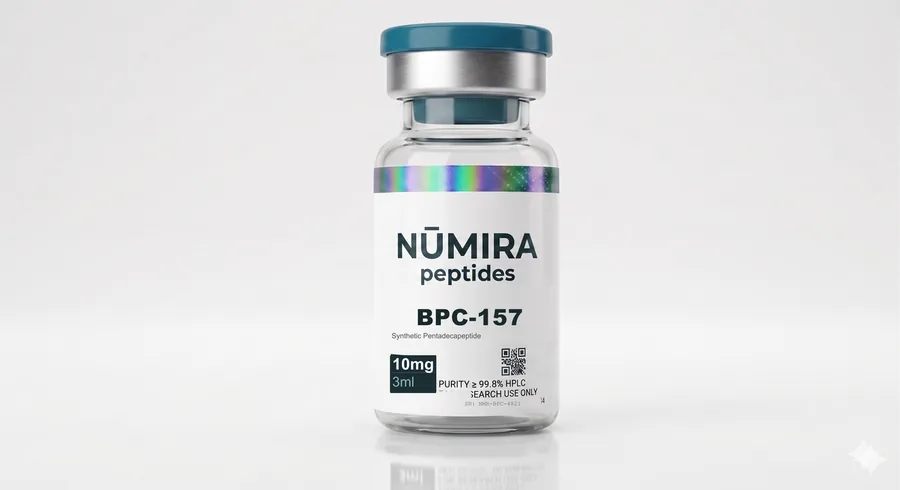
BPC-157 (10mg) — Research Grade
Third-party tested · >98% purity · Lyophilized powder · Ships across Canada
Shop BPC-157 →