What Is GHK-Cu?
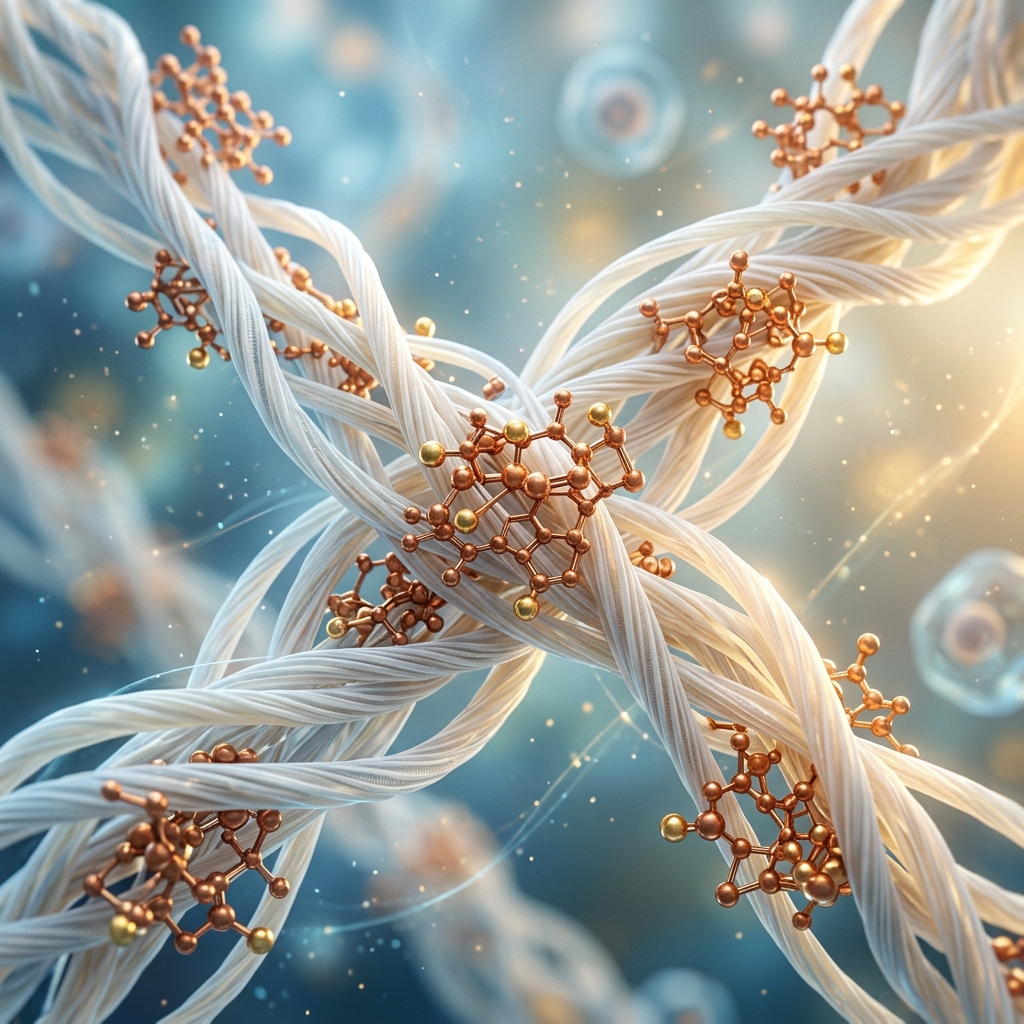
GHK-Cu is a small, naturally occurring tripeptide (Gly-His-Lys) with a high affinity for **copper (II) ions**. In the human body, it is found in the plasma, saliva, and urine, but its concentration declines sharply with age.
The "Cu" in GHK-Cu signifies its complex with copper, which is essential for its biological activity. Copper is a vital cofactor for many enzymes involved in tissue repair and antioxidant defense, and GHK acts as the primary transporter to deliver copper exactly where it is needed.
⚗️ Key Facts
- Molecular formula: C14H21CuN6O4
- Discovery: 1973 by Dr. Loren Pickart
- Primary function: Copper transport & Gene modulation
- Research purity (Nūmira): >98%
- Appearance: Distinctive deep blue powder/solution
How It Works: Gene Modulation
GHK-Cu is one of the few compounds known to significantly influence human gene expression. Research using the Connectivity Map (CMap) has shown that GHK-Cu can influence over 30% of human genes, shifting them toward a state associated with health and vitality.
- Upregulation of Repair Genes: Increases expression of genes involved in collagen, elastin, and DNA repair.
- Downregulation of Inflammatory Genes: Suppresses pro-inflammatory cytokines like TNF-alpha and IL-6.
- Antioxidant Support: Boosts the production of superoxide dismutase (SOD) and other antioxidant enzymes.
Skin Biology & Collagen synthesis
In dermatology research, GHK-Cu is considered one of the most powerful non-invasive regenerative agents. Its effects on the skin include:
1. Collagen & Elastin Stimulation
GHK-Cu stimulates fibroblasts to produce collagen Type I and III, as well as elastin and glycosaminoglycans (GAGs). This leads to increased skin thickness and elasticity in research models.
2. Improved Dermal Integrity
It strengthens the dermo-epidermal junction (DEJ), which typically thins and weakens with age, leading to sagging and fragility.
3. Wound Healing
Accelerates the healing of dermal wounds by increasing the proliferation of keratinocytes and fibroblasts, while reducing the formation of disorganized scar tissue.
Hair Follicle Stimulation
GHK-Cu has shown remarkable results in hair research, often being compared to minoxidil in efficacy but with a different mechanism:
Follicle Size
Increases the size of hair follicles, leading to thicker, stronger hair shafts in animal and ex vivo studies.
Anagen Phase
Extends the anagen (growth) phase of the hair cycle and shortens the telogen (resting) phase.
DHT Inhibition
May inhibit 5-alpha reductase, the enzyme responsible for converting testosterone into DHT, the primary driver of androgenetic alopecia.
Scalp Circulation
Promotes angiogenesis in the scalp, ensuring follicles receive optimal nutrient and oxygen supply.
DNA Repair & Anti-Aging
Recent studies have expanded GHK-Cu's role to include systemic longevity benefits:
- DNA Protection: Helps repair damage to DNA caused by UV radiation and environmental toxins.
- Cognitive Health: Investigated for neuroprotective effects and potential to reduce neuro-inflammation.
- Stem Cell Support: May enhance the viability and function of various stem cell populations.
Research Dosing Protocols
In Vivo Research (Animal Models)
- Systemic Dose: 1–2 mg/kg body weight via subcutaneous injection.
- Topical Concentration: 1% to 3% solution for skin and hair studies.
- Frequency: Once daily for 4–12 weeks.
Reconstitution
GHK-Cu is highly water-soluble. Reconstitute with bacteriostatic water. The resulting solution will be a brilliant deep blue. Store at 2–8°C.
Safety & Stability
GHK-Cu is an exceptionally safe peptide with a long history of research:
- Non-Toxic: No toxicity observed in extensive animal and cell culture studies.
- Highly Stable: More stable than many other peptides, though still sensitive to light and high temperatures after reconstitution.
- Natural Origin: Identical to the peptide found naturally in human blood.
Frequently Asked Questions
What is GHK-Cu?
GHK-Cu is a copper-binding tripeptide found naturally in human plasma. It is used in research to study tissue regeneration, skin aging, and hair growth.
How does it help with hair?
It increases follicle size, extends the growth phase, and improves scalp health through angiogenesis and potential DHT inhibition.
Is GHK-Cu better than BPC-157?
They are not competitors but rather complementary. BPC-157 is often better for internal injuries (tendons, gut), while GHK-Cu is the "gold standard" for surface-level regeneration (skin, hair) and gene-level anti-aging.
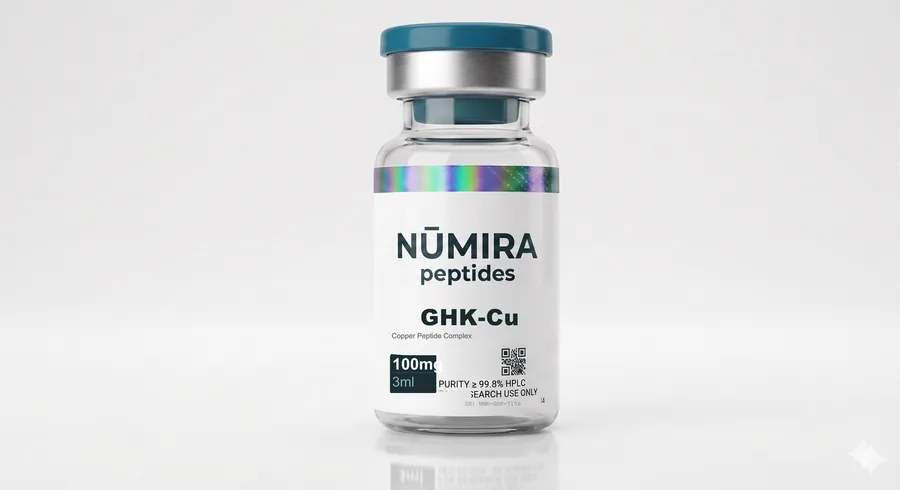
GHK-Cu (100mg) — Research Grade
Third-party tested · >98% purity · Lyophilized powder · Ships across Canada
Shop GHK-Cu →