What Is NAD+?
NAD+ is a coenzyme present in all living cells, essential for over 500 enzymatic reactions. It exists in two forms: NAD+ (oxidized) and NADH (reduced), shuttling electrons in metabolic reactions that convert food into cellular energy (ATP).
Beyond energy metabolism, NAD+ serves as a substrate for critical enzyme families including sirtuins (SIRT1–7), PARPs (DNA repair enzymes), and CD38 (immune cell signaling). These enzymes consume NAD+ during their activity — meaning the body must continually replenish its supply.
⚗️ Key Facts
- Full name: Nicotinamide adenine dinucleotide
- Molecular weight: 663.43 g/mol
- Role: Coenzyme in redox reactions, substrate for sirtuins/PARPs
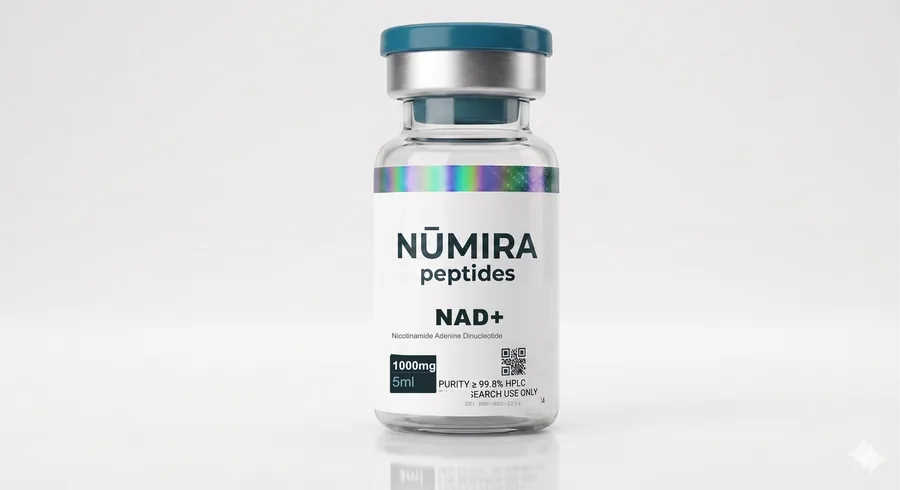
- Nūmira product: 1000mg, research grade
Age-Related NAD+ Decline
Research by Imai, Guarente, and Sinclair has documented that NAD+ levels decline by approximately 50% between ages 40 and 60. This decline is driven by:
- Increased CD38 activity: CD38 expression rises with chronic inflammation, consuming more NAD+
- PARP hyperactivation: Accumulated DNA damage triggers PARP enzymes that use NAD+ as substrate
- Reduced biosynthesis: The NAMPT enzyme (rate-limiting in NAD+ salvage pathway) declines with age
- Mitochondrial dysfunction: Creates a vicious cycle where low NAD+ impairs mitochondria, which further depletes NAD+
This decline is now considered a hallmark of aging and a therapeutic target for age-related disease prevention.
Sirtuins & DNA Repair
Sirtuins (SIRT1–7) are NAD+-dependent deacetylase enzymes that regulate gene expression, metabolism, and cellular stress responses. Key findings:
- SIRT1: Activates PGC-1α for mitochondrial biogenesis; regulates insulin sensitivity; linked to caloric restriction benefits
- SIRT3: Primary mitochondrial sirtuin; regulates fatty acid oxidation and ROS defense
- SIRT6: Critical for DNA double-strand break repair and telomere maintenance
Without adequate NAD+, sirtuin activity drops — leading to epigenetic dysregulation, increased inflammation, and impaired DNA repair capacity.
Mitochondrial Function
NAD+ is essential for the electron transport chain (ETC) in mitochondria. As NAD+ declines:
- ATP production decreases, causing cellular energy deficit
- Reactive oxygen species (ROS) increase, damaging mitochondrial DNA
- Mitophagy (removal of damaged mitochondria) becomes impaired
- New mitochondrial biogenesis slows due to reduced SIRT1/PGC-1α signaling
Restoring NAD+ levels has been shown to reverse mitochondrial dysfunction in aged mice (Gomes et al., Cell 2013), restoring exercise capacity and metabolic markers to levels comparable to younger animals.
Research Benefits Summary
Energy Metabolism
Drives ATP production through the electron transport chain. Essential for cellular energy in all tissues.
DNA Repair
Fuels PARP and sirtuin enzymes that detect and repair DNA damage, preventing mutations and genomic instability.
Healthy Aging
NAD+ repletion reverses age-related decline in muscle, brain, and metabolic function in animal models.
Neuroprotection
Supports neuronal energy metabolism and has shown protective effects in models of neurodegeneration.
Dosing & Administration
- IV research protocols: 250–1000mg infusions in clinical studies
- Precursor supplementation (NMN/NR): 250–1000mg/day in human trials
- Direct NAD+ administration bypasses conversion steps required by precursors
Frequently Asked Questions
What is NAD+?
NAD+ (nicotinamide adenine dinucleotide) is a coenzyme in every cell that drives energy metabolism, DNA repair, and sirtuin-mediated gene regulation.
Why does NAD+ decline with age?
Increased CD38 consumption, PARP hyperactivation from DNA damage, and reduced NAMPT enzyme activity all contribute to a ~50% decline by age 60.
Where can I buy NAD+ in Canada?
Nūmira Peptides supplies research-grade NAD+ (1000mg) with shipping across Canada. View NAD+ →