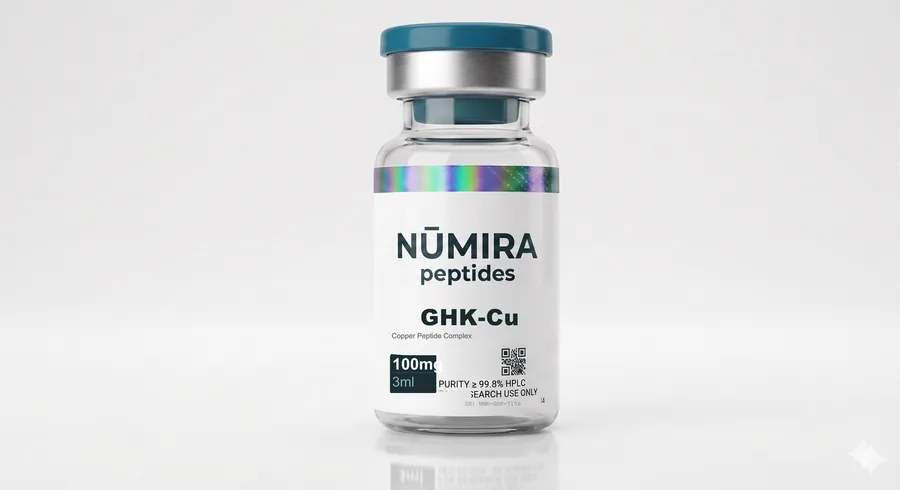
GHK-Cu is a naturally occurring copper peptide complex. In laboratory research it is investigated for its roles in skin biology, collagen synthesis, wound healing, and anti-inflammatory signaling.
| Molecular Weight | 340.38 g/mol |
| Purity | >98% |
| Form | Lyophilized powder |
| Storage | -20°C |
Science-backed research overview for this compound
GHK-Cu (glycyl-L-histidyl-L-lysine copper) is a naturally occurring tripeptide complex first identified in human plasma in the 1970s. It acts as a bioregulatory molecule influencing over 4,000 human genes — roughly 31% of the genome — across repair, growth, and metabolic regulation pathways. Plasma levels decline significantly with age, dropping from ~200 ng/mL at age 20 to ~80 ng/mL by age 60.
GHK-Cu promotes collagen types I, III, and IV synthesis (up to 70% increase in fibroblast cultures), reduces pro-inflammatory cytokines (TNF-α, IL-1β, IL-6), enhances superoxide dismutase (SOD) antioxidant activity, stimulates angiogenesis for improved nutrient delivery, and modulates gene expression to restore aged tissue profiles closer to younger functional states.
GHK-Cu stimulates dormant hair follicles to re-enter the anagen (growth) phase, increases follicle size for thicker hair shafts, promotes angiogenesis around follicles, reduces scalp inflammation, and may support melanin production for natural pigmentation. Unlike hormonal treatments, it works through non-hormonal regenerative pathways.