What Is TB-500?
TB-500 is a synthetic peptide containing the residues 17 to 23 of the naturally occurring protein Thymosin Beta-4. This specific fragment, defined by the amino acid sequence LKKTETQ, is considered the primary active site responsible for Tβ4's most significant regenerative properties.
While Thymosin Beta-4 is a large 43-amino acid protein found in almost all human and animal cells, TB-500 is a smaller, more focused fragment studied for its superior stability and targeted action on cellular motility.
⚗️ Key Facts
- Molecular weight: 4,963.5 g/mol (full protein) / 750.9 g/mol (fragment)
- Structure: 7-amino acid active fragment (TB-500)
- Biological role: Major G-actin sequestering molecule
- Research purity (Nūmira): >98%
- Form: Lyophilized powder
Mechanism: Actin Sequestration
The core mechanism of TB-500 lies in its ability to bind to **G-actin (globular actin)**. Actin is a protein that forms the "skeleton" of the cell (cytoskeleton).
Actin Dynamics
By binding to G-actin monomers in a 1:1 ratio, TB-500 prevents their polymerization into F-actin (filamentous actin). This creates a reservoir of unpolymerized actin that the cell can use to rapidly restructure its cytoskeleton.
- Cell Motility: Rapid cytoskeletal changes allow cells to move and migrate toward injury sites.
- Structural Adaptation: Helps cells adapt to mechanical stress and environment changes.
- Cellular Transport: Supports the internal transport mechanisms necessary for repair.
Angiogenesis & Blood Flow
TB-500 is a potent stimulator of angiogenesis — the formation of new blood vessels from existing ones. This is achieved through several pathways:
1. Endothelial Cell Migration
By regulating actin, TB-500 facilitates the migration of endothelial cells (the cells lining blood vessels). These cells move into damaged tissue to form new capillary-like structures.
2. Upregulation of VEGF
Studies show that Tβ4 fragments increase the expression of **Vascular Endothelial Growth Factor (VEGF)**, a master regulator of vessel growth.
3. Improved Tissue Perfusion
Increased micro-vascular density leads to better oxygen and nutrient delivery to the injury site, significantly accelerating the biological timeline of repair.
Tissue Repair Research
Research indicates that TB-500's primary applications are in the repair of dense connective tissues and muscle:
Muscle Repair
Promotes the differentiation of satellite cells (muscle stem cells) into new muscle fibers, accelerating recovery from tears and strains.
Tendon & Ligament
Enhances collagen deposition and fibroblast migration in tendons, which naturally have poor blood supply and slow healing rates.
Wound Healing
Accelerates dermal wound closure by promoting keratinocyte migration and reducing the formation of excessive scar tissue (fibrosis).
Corneal Healing
Studied for its ability to heal corneal injuries and reduce inflammation in ophthalmic research models.
Cardiac & Neural Research
Beyond musculoskeletal repair, TB-500 is investigated for its systemic protective effects:
Cardiac Tissue Regeneration
Tβ4 has shown the ability to activate epicardial progenitor cells, which can migrate into the myocardium and potentially repair damaged heart tissue after ischemia (e.g., heart attack models). TB-500 fragments are used to study this specific regenerative pathway.
Neuroprotection
Emerging studies suggest TB-500 may promote neurite outgrowth and protect neurons from oxidative stress, making it a subject of interest in neurodegenerative research.
Research Dosing Protocols
In Vivo Research (Animal Models)
- Loading phase (Initial): 2–5 mg per week (typically split into 2–3 doses) for 4 weeks.
- Maintenance phase: 2 mg every 1–2 weeks.
- Administration: Subcutaneous or Intramuscular.
Reconstitution
Dissolve the lyophilized powder in bacteriostatic water. Gently swirl; do not shake. Store at 2–8°C after reconstitution.
Safety Profile
TB-500 is generally well-tolerated in research models due to its close similarity to the naturally occurring Tβ4 protein:
- Non-Hormonal: Does not affect the HPTA or growth hormone axis.
- Low Toxicity: No established LD50 in animal models.
- Endogenous Presence: Since Tβ4 is naturally present in high concentrations in platelets and white blood cells, the body has established pathways for its processing.
Frequently Asked Questions
What is TB-500?
TB-500 is a synthetic version of the active segment of Thymosin Beta-4. It is studied for its ability to promote cell migration, blood vessel growth, and tissue repair.
How does it differ from BPC-157?
While both are healing peptides, they have different mechanisms. TB-500 focuses on cell migration and angiogenesis via actin, whereas BPC-157 focuses on VEGF upregulation, nitric oxide modulation, and gastric protection. They are often studied together for synergistic effects.
Is TB-500 the same as Thymosin Beta-4?
TB-500 is a 7-amino acid fragment of the 43-amino acid Thymosin Beta-4 protein. In research, "TB-500" is often used interchangeably with the fragment, while Tβ4 refers to the full-length protein.
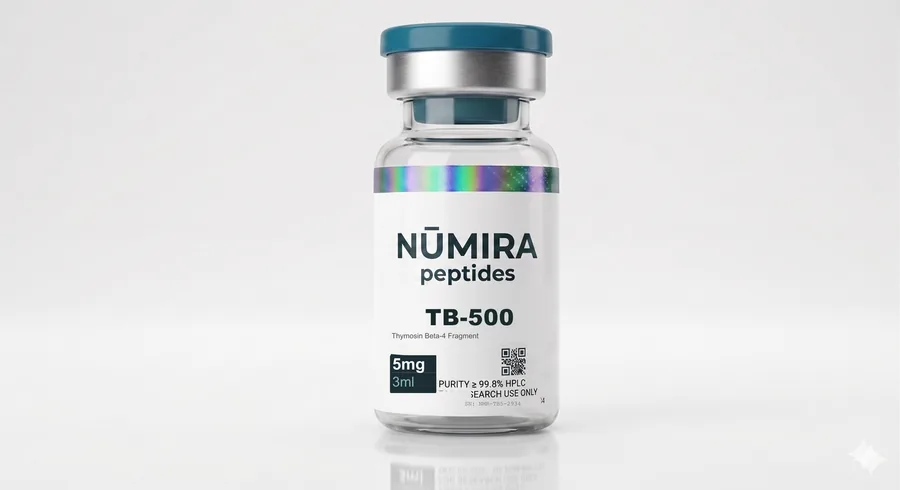
TB-500 (5mg) — Research Grade
Third-party tested · >98% purity · Lyophilized powder · Ships across Canada
Shop TB-500 →