

What Is Tirzepatide?
Tirzepatide is a synthetic, 39-amino acid peptide based on the sequence of naturally occurring **Gastric Inhibitory Polypeptide (GIP)**. It is uniquely engineered with a C20 fatty diacid moiety that allows it to bind to albumin, significantly extending its half-life to approximately 5 days.
Unlike single-target agonists, Tirzepatide is a **dual agonist**, meaning it activates both the GLP-1 receptor and the GIP receptor. This synergistic approach is designed to maximize the metabolic benefits of incretin signaling while potentially reducing the side effects associated with high-dose single-receptor activation.
⚗️ Key Facts
- Molecular weight: 4,813.5 g/mol
- Sequence: 39 amino acids with C20 fatty diacid
- Class: Dual GLP-1/GIP receptor agonist
- Research purity (Nūmira): >98%
- Form: Lyophilized powder
Dual Mechanism: GLP-1 & GIP
To understand Tirzepatide, one must understand the two pathways it activates:
1. GLP-1 (Glucagon-Like Peptide-1)
GLP-1 is an incretin hormone that stimulates insulin secretion in a glucose-dependent manner, suppresses glucagon release, and slows gastric emptying. It also acts on the brain to promote satiety.
2. GIP (Glucose-Dependent Insulinotropic Polypeptide)
GIP is the most abundant incretin hormone. While it also stimulates insulin secretion, it has unique effects on adipose tissue, potentially improving lipid metabolism and insulin sensitivity in fat cells. It may also help buffer some of the nausea associated with GLP-1 activation.
The Synergistic Effect
Research suggests that GIP and GLP-1 act synergistically. While GLP-1 provides powerful appetite suppression and glucose control, GIP may enhance the body's overall metabolic efficiency and insulin response, leading to superior results in metabolic research models.
Metabolic Pathway Regulation
Tirzepatide's impact on metabolism is multifaceted:
- Beta-Cell Function: Promotes the survival and function of pancreatic beta-cells.
- Insulin Sensitivity: Enhances the response of peripheral tissues (muscle and liver) to insulin.
- Lipid Metabolism: Improves the clearance of triglycerides and influences adipose tissue storage patterns.
- Energy Expenditure: Emerging research investigates potential increases in resting metabolic rate.
Glucose Homeostasis Studies
In various research settings, Tirzepatide has shown a "dose-dependent" improvement in all major markers of glucose control:
HbA1c Reduction
Consistently shows superior reductions in glycated hemoglobin compared to single GLP-1 agonists in long-term studies.
Postprandial Glucose
Significantly reduces blood sugar spikes following meals through optimized insulin timing.
Fasting Glucose
Normalizes baseline glucose levels through sustained receptor activation.
Insulin Secretion
Restores the "first-phase" insulin response, which is often lost in early metabolic dysfunction.
Tirzepatide vs. Semaglutide
While both are highly effective, researchers often compare these two compounds to understand the value of GIP agonism:
| Feature | Semaglutide | Tirzepatide |
|---|---|---|
| Targets | GLP-1 Only | GLP-1 + GIP |
| Structure | 31 amino acids | 39 amino acids |
| Metabolic Potency | High | Very High |
| GI Side Effects | Moderate | Similar/Slightly Lower* |
*Some studies suggest GIP may help mitigate GLP-1 induced nausea at equivalent potency levels.
Research Dosing Protocols
In Vivo Research (Animal Models)
- Starting Dose: 2.5 mg once weekly.
- Escalation: Increments of 2.5 mg every 4 weeks (e.g., 5.0 mg, 7.5 mg, 10 mg, 12.5 mg, 15 mg).
- Administration: Subcutaneous injection.
- Frequency: Once weekly (due to 5-day half-life).
Reconstitution
Reconstitute with bacteriostatic water. Due to the fatty acid chain, it may take slightly longer to dissolve than smaller peptides. Do not shake; allow it to sit and gently swirl. Store at 2–8°C.
Safety & Side Effects
Tirzepatide is generally well-tolerated in research models, with most adverse effects being gastrointestinal in nature:
- GI Distress: Nausea, vomiting, and diarrhea are common during the initial dose-escalation phase.
- Gallbladder: Some studies note a potential risk of gallbladder-related issues with rapid metabolic changes.
- Hydration: Maintaining adequate hydration is critical in research subjects due to slowed gastric emptying.
Frequently Asked Questions
What is a "Dual Agonist"?
A dual agonist is a single molecule that can bind to and activate two different receptors. In Tirzepatide's case, it activates both the GLP-1 and GIP receptors.
Is Tirzepatide stronger than Semaglutide?
Research consistently shows that Tirzepatide achieves greater metabolic changes and glucose control than Semaglutide, likely due to the additional GIP pathway.
How should Tirzepatide be stored?
Lyophilized powder should be stored in a cool, dark place (refrigerator preferred). After reconstitution, it MUST be refrigerated and used within 30 days.
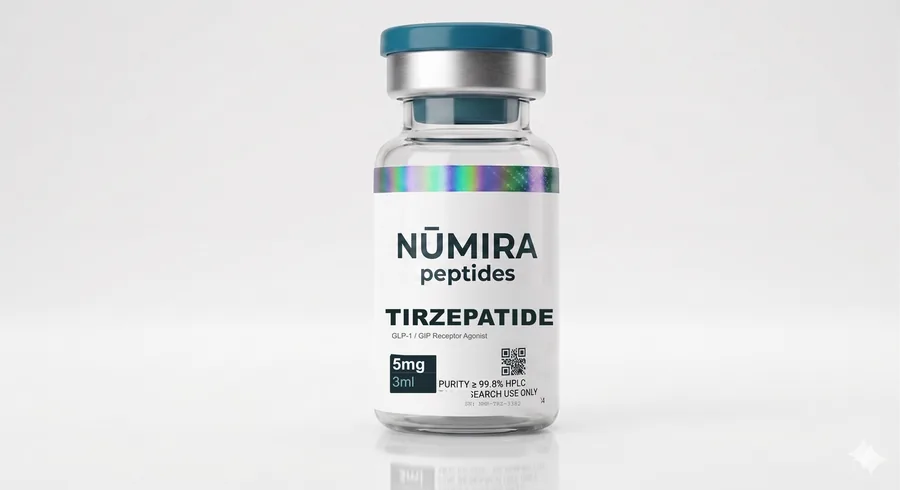
Tirzepatide (5mg) — Research Grade
Third-party tested · >98% purity · Lyophilized powder · Ships across Canada
Shop Tirzepatide →