
What Is Retatrutide?
Retatrutide is a synthetic, 39-amino acid peptide that represents the next evolution of incretin therapy. While earlier generations targeted one (Semaglutide) or two (Tirzepatide) receptors, Retatrutide is designed to interact with three key metabolic receptors in a balanced manner.
The peptide is structurally optimized for stability and sustained activity, featuring a C20 fatty acid side chain that allows for a long half-life, suitable for once-weekly administration in research settings.
⚗️ Key Facts
- Molecular weight: ~4,800 g/mol
- Class: Triple Receptor Agonist
- Targets: GLP-1R, GIPR, and GCGR (Glucagon Receptor)
- Research purity (Nūmira): >98%
- Form: Lyophilized powder
Triple Mechanism: The 3 Pathways
Retatrutide's potency comes from its ability to orchestrate three distinct but overlapping metabolic signals:
1. GIP (Incretin Leader)
Acts on the GIP receptor to enhance insulin secretion and potentially protect against some of the GI side effects of GLP-1. In Retatrutide, GIP agonism is considered the "foundation."
2. GLP-1 (Appetite Regulator)
Provides the well-known benefits of appetite suppression, slowed gastric emptying, and potent glucose-dependent insulin release.
3. Glucagon (Energy Catalyst)
The "missing piece" in previous generations. Activation of the glucagon receptor increases energy expenditure and directly influences lipid metabolism in the liver.
The Glucagon Advantage
The addition of glucagon receptor agonism is what separates Retatrutide from its predecessors. In traditional biology, glucagon is seen as the "opponent" of insulin, but at specific research-controlled levels, its activation provides several unique benefits:
- Increased Thermogenesis: Promotes the body's ability to burn energy as heat.
- Direct Lipolysis: Encourages the breakdown of stored fats into usable energy.
- Liver Protection: Studied for its ability to clear fat from the liver more effectively than GLP-1 alone.
Metabolic Energy Studies
Preclinical and early clinical research has shown that the triple combination produces metabolic changes that significantly exceed those of dual agonists:
Metabolic Surge
Achieves rapid and sustained improvements in metabolic markers across all study groups.
Glucose Precision
Normalizes blood glucose levels with a high degree of stability through balanced hormonal signaling.
Muscle Preservation
Researchers are investigating if the triple-agonist approach helps maintain lean mass better than single-target approaches.
Lipid Mastery
Shows profound reductions in liver fat and improvements in overall cholesterol profiles.
Retatrutide vs. Tirzepatide
Researchers often ask if the third target (Glucagon) is worth the additional complexity. Early data suggests it is:
| Feature | Tirzepatide | Retatrutide |
|---|---|---|
| Receptors | GLP-1 + GIP | GLP-1 + GIP + Glucagon |
| Energy Expenditure | Moderate Increase | Significant Increase |
| Liver Fat Clearance | High | Very High |
| Potency | High | Maximum |
Research Dosing Protocols
In Vivo Research (Animal Models)
- Initial Dose: 1 mg to 2 mg once weekly.
- Titration: Slow escalation every 4 weeks to manage GI tolerance.
- Maintenance Range: 4 mg to 12 mg weekly in advanced studies.
- Administration: Subcutaneous.
Reconstitution
Use bacteriostatic water. The C20 fatty acid chain makes this peptide very stable, but it requires gentle swirling to fully dissolve. Store at 2–8°C.
Safety & Future Outlook
The safety profile of Retatrutide appears consistent with the GLP-1/GIP class, with a few notable additions:
- Heart Rate: Glucagon agonism can cause a slight, dose-dependent increase in resting heart rate in research models.
- GI Management: Titration is even more critical here than with Semaglutide to ensure subject tolerance.
- Hyper-Responders: Some models show extremely rapid responses, requiring close monitoring of metabolic markers.
Frequently Asked Questions
What is a "Triple Agonist"?
A triple agonist is a single peptide designed to activate three different hormone receptors (GLP-1, GIP, and Glucagon) to provide a more comprehensive metabolic response.
Why add Glucagon?
Glucagon activation increases energy expenditure and promotes the breakdown of fat, especially in the liver, which complements the appetite-suppressing effects of GLP-1.
Is Retatrutide available in Canada?
Nūmira Peptides supplies research-grade Retatrutide (15mg vials) with fast shipping across Canada. View Product →
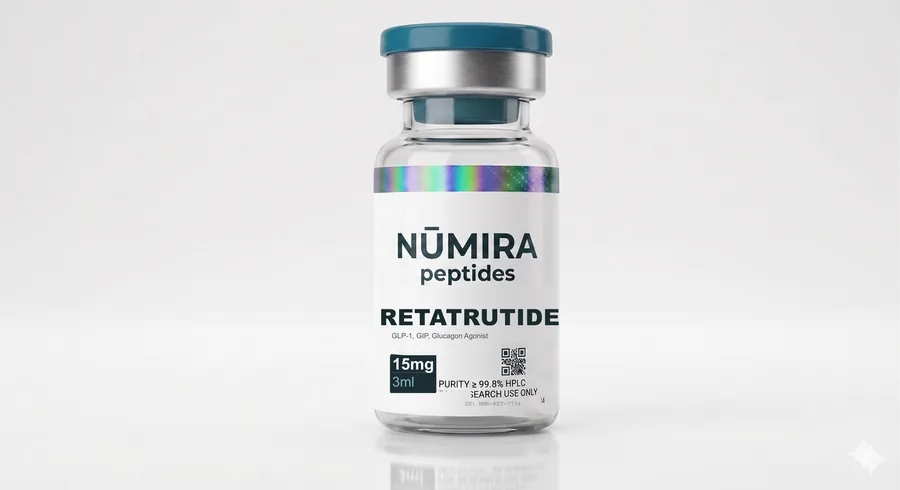
Retatrutide (15mg) — Research Grade
Third-party tested · >98% purity · Lyophilized powder · Ships across Canada
Shop Retatrutide →