

What Is Semaglutide?
Semaglutide is a 31-amino acid peptide that shares 94% sequence homology with human GLP-1. It was developed to overcome the primary limitation of native GLP-1: its extremely short half-life of less than 2 minutes due to rapid degradation by the enzyme DPP-4.
By replacing the alanine at position 8 with alpha-aminoisobutyric acid and attaching a 16-carbon fatty acid side chain, Semaglutide becomes highly resistant to DPP-4 and binds strongly to albumin. This results in a half-life of approximately 165 hours (7 days), allowing for once-weekly administration in research models.
⚗️ Key Facts
- Molecular weight: 4,113.58 g/mol
- Sequence: 31 amino acids with C16 fatty acid chain
- Class: GLP-1 Receptor Agonist (GLP-1RA)
- Research purity (Nūmira): >98%
- Form: Lyophilized powder
Mechanism: GLP-1 Activation
Semaglutide acts as a "mimetic" of GLP-1, binding to the GLP-1 receptor (GLP-1R) located in various tissues, including the pancreas, brain, heart, and gastrointestinal tract.
1. Insulinotropism
It stimulates the release of insulin from pancreatic beta-cells, but crucially, it only does so when blood glucose levels are elevated. This reduces the risk of hypoglycemia in research settings.
2. Glucagon Suppression
It inhibits the secretion of glucagon from alpha-cells, preventing the liver from releasing unnecessary glucose into the bloodstream.
3. Gastric Emptying
It slows the rate at which the stomach empties its contents (gastric motility), which leads to a more gradual absorption of glucose from the diet.
Pancreatic & Glucose Effects
The primary focus of Semaglutide research has been on reversing the markers of metabolic dysfunction:
- Beta-Cell Preservation: Studies suggest Semaglutide may protect beta-cells from apoptosis (programmed cell death) and promote their regeneration.
- Glucose Clearance: Enhances the efficiency of peripheral tissues in absorbing glucose from the blood.
- Liver Health: Investigated for its ability to reduce hepatic fat accumulation (steatosis).
Appetite & Brain Axis
Semaglutide crosses the blood-brain barrier and acts directly on the **hypothalamus** and other areas of the brain involved in energy regulation:
Satiety Signal
Increases the intensity of "fullness" signals sent to the brain following food intake.
Reward Pathways
May modulate dopamine signaling in the brain's reward centers, potentially reducing "cravings" for highly palatable foods.
Neuroprotection
Recent research explores Semaglutide's potential to reduce neuro-inflammation and protect against neurodegenerative processes.
Cardiovascular Research
One of the most significant findings in recent Semaglutide research is its **cardio-protective** potential:
- Vascular Health: Improves endothelial function and reduces systemic inflammation (measured by CRP).
- Blood Pressure: Modest reductions in systolic blood pressure have been observed in research models.
- Lipid Profile: Positively influences triglyceride levels and overall lipid metabolism.
Research Dosing Protocols
In Vivo Research (Animal Models)
- Starting Dose: 0.25 mg once weekly for 4 weeks.
- Escalation: Increase to 0.5 mg for 4 weeks, then 1.0 mg as needed.
- Administration: Subcutaneous injection.
- Frequency: Once weekly.
Reconstitution
Reconstitute with bacteriostatic water. Gently swirl; do not shake. The solution should be clear. Store at 2–8°C.
Safety & GI Tolerance
Semaglutide has a well-established safety profile, with the most common adverse effects being transient gastrointestinal issues:
- Nausea: Most common during the first 2–4 weeks of a new dose level.
- Hydration: Slowed gastric emptying requires researchers to monitor hydration levels in subjects carefully.
- Long-term Safety: Extensive long-term studies have shown a favorable benefit-risk ratio in metabolic research.
Frequently Asked Questions
What is Semaglutide?
Semaglutide is a GLP-1 receptor agonist studied for its effects on glucose control, appetite regulation, and cardiovascular health.
How does it differ from Tirzepatide?
Semaglutide targets only the GLP-1 receptor, while Tirzepatide targets both GLP-1 and GIP receptors. Research suggests Tirzepatide may be more potent, but Semaglutide has a longer history of cardiovascular safety data.
Can Semaglutide be used with BPC-157?
Some researchers study these together to investigate if BPC-157's gastric protective effects can mitigate some of the GI discomfort associated with GLP-1 agonists.
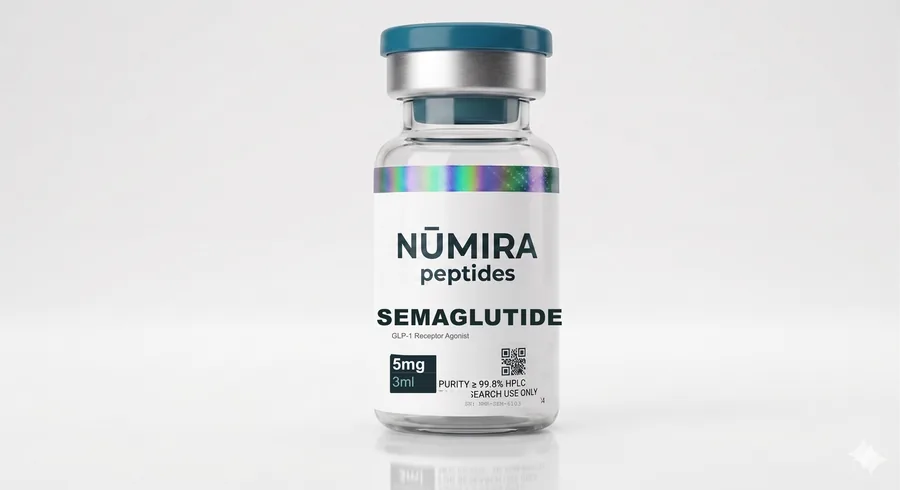
Semaglutide (5mg) — Research Grade
Third-party tested · >98% purity · Lyophilized powder · Ships across Canada
Shop Semaglutide →