What is Pinealon?
Pinealon is a short peptide consisting of only three amino acids: **Glutamic Acid, Aspartic Acid, and Arginine**. Like its "cousin" Epitalon, it was developed by the Khavinson Institute in Russia. While Epitalon is a broad-spectrum longevity agent, Pinealon was designed with a specific focus on the central nervous system.
In research, Pinealon is noted for its high bioavailability and its unique ability to influence the expression of genes responsible for protecting the brain's delicate neural networks.
⚗️ Key Research Facts
- Molecular Type: Tripeptide (EDR)
- Primary Goal: Neuroprotection
- Target: Neurons & Pineal Gland
- Bioavailability: High (Crosses Blood-Brain Barrier)
Mechanism: Gene Expression & Neuroprotection
Pinealon works as a "gene-switches" regulator. It enters the nuclei of neurons and binds to specific segments of DNA, signaling the cell to produce more protective proteins.
- Inhibiting Apoptosis: Prevents "programmed cell death" in neurons caused by high stress or low oxygen.
- Reducing Oxidative Stress: Enhances the brain's internal antioxidant defenses, neutralizing free radicals before they can damage neural synapses.
Impact on Cognitive Resilience
Research into Pinealon often focuses on its role in improving cognitive function after injury or during the aging process. Studies indicate it can help maintain memory, learning capacity, and mental clarity in research models by ensuring that the communication between neurons remains fluid and protected.
Hypoxia Protection
Significantly increases the survival rate of brain cells during periods of low oxygen (hypoxia) in laboratory models.
Mental Endurance
Supports the brain's ability to maintain focus and process information under high-stress conditions.
Circadian Rhythm & Pineal Support
While Epitalon works on the broad endocrine output of the pineal gland, Pinealon works more directly on the gland's internal cellular health. Research suggests it helps regulate the production of serotonin and melatonin, contributing to a more stable and "youthful" circadian rhythm.
Research Protocols & Dosing
- Administration: Subcutaneous injection or sublingual/oral.
- Research Dose: 5 mg to 10 mg per day.
- Frequency: Typically administered for 10–20 days as part of a targeted cycle.
- Side Effects: Non-toxic and generally reported as side-effect free in peer-reviewed literature.
- Storage: Lyophilized powder in the freezer. Reconstituted solution in the refrigerator.
Frequently Asked Questions
Does it cross the Blood-Brain Barrier?
Yes. Due to its very small size (only three amino acids), research confirms that Pinealon crosses the blood-brain barrier with high efficiency, unlike larger peptides that require specialized delivery systems.
Is it a stimulant?
No. Pinealon is not a stimulant like caffeine or modafinil. It improves brain function through long-term structural protection and genetic regulation, not through immediate CNS stimulation.
Where to buy Pinealon in Canada?
Nūmira Peptides offers high-purity Pinealon for laboratory and neuroprotective research. Shop Pinealon →
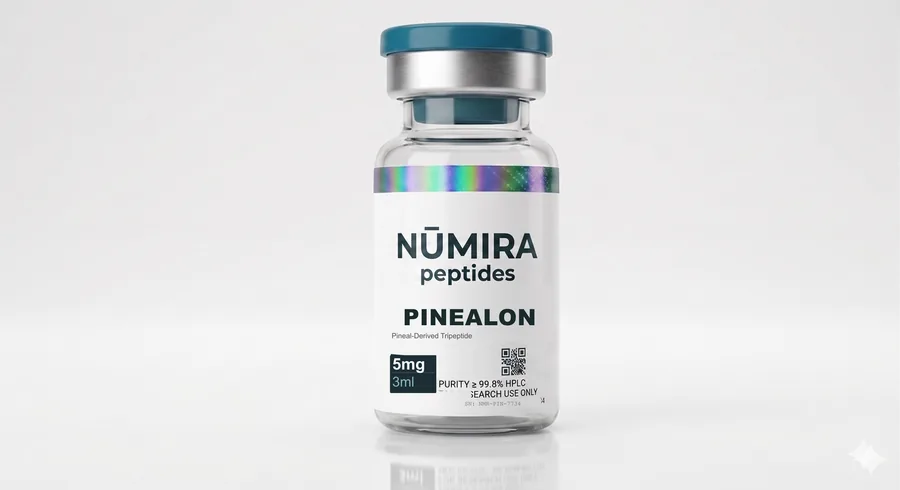
Pinealon — Research Grade
Purity >98% · Neuroprotective Tripeptide · Third-party tested
Shop Pinealon →