
What is Melatonin?
Melatonin is an indoleamine hormone derived from the amino acid tryptophan. While it is produced by the pineal gland in response to darkness, it is also synthesized in the gut and individual cells throughout the body. It is the molecular signal for "nighttime," telling the body's systems to begin the repair and recovery processes.
In research, Melatonin is studied not just as a sleep aid, but as a critical "chronobiotic" that can reset the entire biological clock after jet lag or shift work.
⚗️ Key Research Facts
- Molecular Type: Indoleamine Hormone
- Precursor: Serotonin / Tryptophan
- Primary Goal: Circadian Phase-Shifting
- Benefit: Free Radical Scavenging
Mechanism: MT1 & MT2 Receptors
Melatonin works by binding to two specific G-protein coupled receptors in the brain:
- MT1 Receptor: Regulates the "onset" of sleep by reducing the firing of neurons in the suprachiasmatic nucleus (the body's clock).
- MT2 Receptor: Responsible for the "phase-shifting" effect—it tells the body *when* the day begins and ends.
- Intracellular Action: Unlike many hormones, Melatonin can cross all cell membranes and enter the mitochondria directly, where it acts as a primary antioxidant.
Circadian Rhythm & Sleep Stages
Melatonin research highlights its ability to improve "sleep architecture." It helps the body transition into deep, restorative **Stage 3 (NREM)** sleep, which is when the brain's glymphatic system clears out metabolic waste. Research indicates that low-dose melatonin is more effective for phase-shifting, while higher doses may be needed for its neuroprotective effects.
The "Mitochondrial" Antioxidant
One of the most exciting areas of modern research is Melatonin's role in the mitochondria. As the "powerhouses" of the cell, mitochondria produce a lot of waste (oxidative stress). Melatonin is one of the few molecules that can enter the mitochondria to neutralize this waste, preventing the cellular aging and damage associated with chronic disease.
Immune Support
Research suggests Melatonin modulates the immune response, helping to prevent excessive inflammation during viral infections.
Neuroprotection
Studied for its potential to slow the progression of neurodegenerative diseases by protecting brain cells from oxidative death.
Research Protocols & Dosing
- Administration: Oral (Capsules) or Topical.
- Research Dose: 0.5 mg to 10 mg (for sleep) or up to 50mg+ (for antioxidant research).
- Timing: Administered 30–60 minutes before the desired sleep window.
- Side Effects: Daytime drowsiness, headache, or vivid dreams.
- Storage: Store in a cool, dry place. Stable at room temperature.
Frequently Asked Questions
Does it stop your body from making its own?
Short-term research indicates that exogenous melatonin does not cause a "negative feedback loop" that stops natural production, unlike many other hormones. However, long-term chronic use is still a subject of ongoing study.
Can I use it for anti-aging?
Many researchers use Melatonin as part of a longevity protocol specifically for its mitochondrial protective effects, aiming to maintain cellular health throughout the aging process.
Where to buy Melatonin in Canada?
Nūmira Peptides offers high-purity Melatonin (10mg x 60) for sleep and metabolic research. Shop Melatonin →
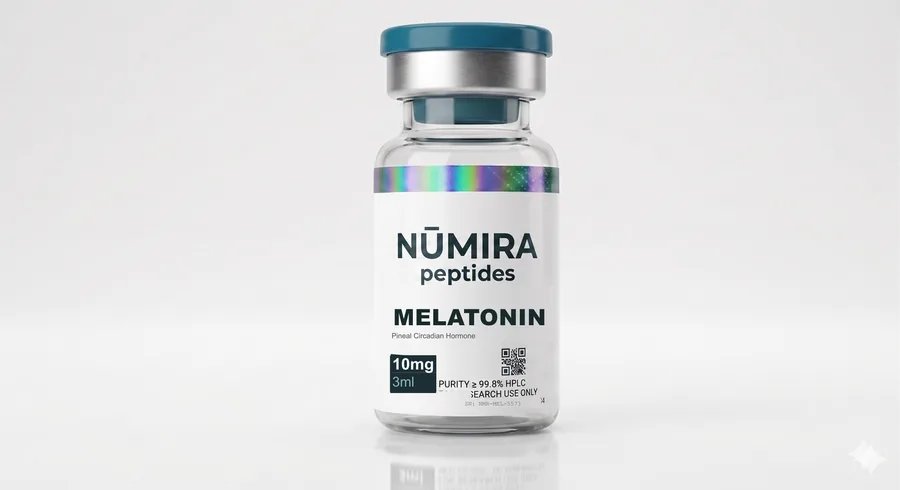
Melatonin — Research Grade
600mg (10mg x 60) · High Purity · Circadian Regulator · Domestic shipping
Shop Melatonin →