What is Epithalon?
Epithalon is a synthetic version of Epithalamin, a peptide naturally produced in the pineal gland. Discovered by Professor Vladimir Khavinson at the St. Petersburg Institute of Bioregulation and Gerontology, Epithalon has been studied for over 35 years for its role in biological aging.
Its primary function in research models is to regulate the endocrine system, enhance cellular resistance to oxidative stress, and—most famously—interact with the genetic components of aging.
⚗️ Key Research Facts
- Sequence: Ala-Glu-Asp-Gly
- Primary Mechanism: Telomerase Induction
- Secondary Role: Pineal Gland Restoration
- Purity Standard: >98% (Research Grade)
Telomerase Activation Mechanism
Telomeres are the protective caps at the ends of our chromosomes. Each time a cell divides, the telomeres shorten. When they become too short, the cell enters "senescence" and can no longer function or repair itself. This is known as the **Hayflick Limit**.
Overcoming the Hayflick Limit
Research suggests that Epithalon can activate the enzyme Telomerase. This enzyme has the unique ability to add nucleotide sequences back onto the ends of telomeres, effectively "rejuvenating" the cell and allowing it to continue dividing and functioning like a younger cell.
- DNA Repair: Enhances the cell's ability to repair damage from UV radiation and oxidative stress.
- Gene Accessibility: Modulates chromatin structure to promote more "youthful" gene expression.
Pineal Gland & Melatonin Regulation
The pineal gland is the master regulator of our circadian rhythms and biological age. As we age, the pineal gland often calcifies and produces less melatonin.
Research into Epithalon shows it can restore the functionality of the pineal gland in aging models. This leads to a restoration of natural, pulsatile melatonin secretion, which improves sleep quality, boosts immune function, and acts as a powerful systemic antioxidant.
Lifespan Extension Research
Prof. Khavinson's research, including several large-scale studies on elderly populations and animal models, has produced some of the most dramatic findings in gerontology:
Lifespan Extension
Animal models have shown a significant increase in both mean and maximum lifespan (up to 30-40% in some studies).
Tumor Resistance
Surprisingly, despite telomerase activation, research often shows a *reduction* in tumor incidence in aging treated models.
Research Protocols & Dosing
- Administration: Subcutaneous injection.
- Standard Protocol: 5 mg to 10 mg daily for 10–20 days.
- Cycle Frequency: Typically repeated only twice per year.
- Storage: Lyophilized powder should be stored in the freezer. Reconstituted solution must be refrigerated.
Frequently Asked Questions
Does Epithalon increase cancer risk?
While telomerase activation is often associated with cancer cell immortality, Professor Khavinson’s long-term animal and human research actually demonstrated a lower incidence of spontaneous tumors in treated groups, possibly due to improved DNA repair and immune surveillance.
What is the difference between Epithalon and Epithalamin?
Epithalamin is the raw, natural extract from the bovine pineal gland. Epithalon is the synthetic, purified tetrapeptide that has been isolated as the most active component of the extract.
Where to buy Epithalon in Canada?
Nūmira Peptides offers laboratory-grade Epithalon with >98% purity and reliable domestic shipping. Shop Epithalon →
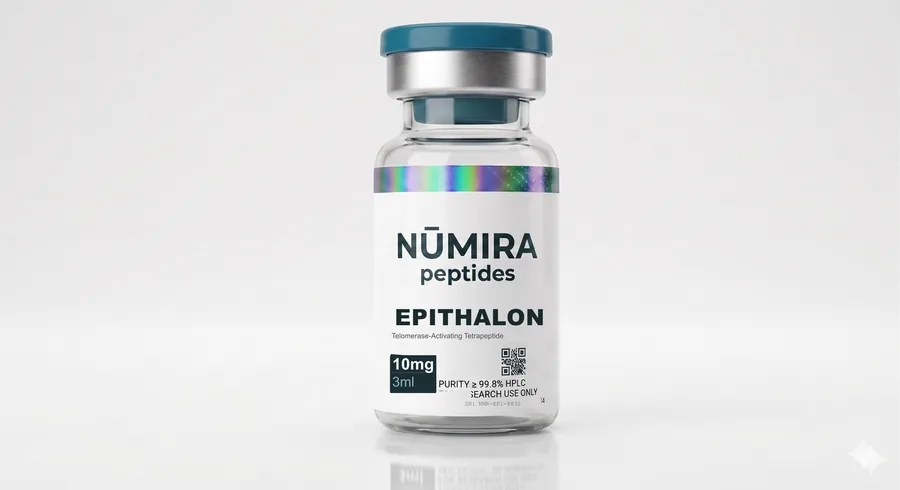
Epithalon — Research Grade
Purity >98% · Third-party tested · High-quality longevity research supply
Shop Epithalon →