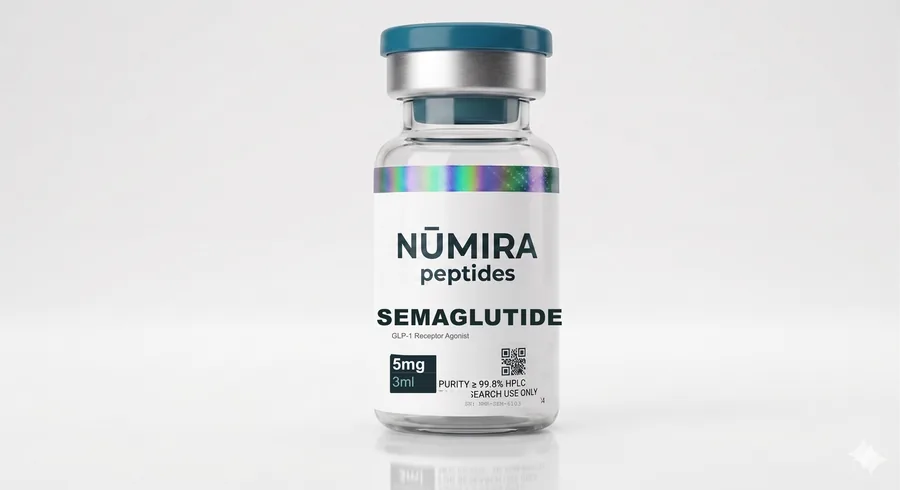
Semaglutide is a long-acting GLP-1 receptor agonist studied for glucose homeostasis, appetite suppression, body weight regulation, and cardiovascular outcome research.
| Molecular Weight | 4113.58 g/mol |
| Purity | >98% |
| Form | Lyophilized powder |
| Storage | -20°C |
Science-backed research overview for this compound
Semaglutide is a long-acting analogue of the human Glucagon-like Peptide-1 (GLP-1). It is a modified peptide designed to resist enzymatic degradation, allowing for a much longer half-life (around 7 days) compared to natural GLP-1.
Semaglutide works by mimicking the GLP-1 hormone that is naturally released after eating. It binds to GLP-1 receptors in the pancreas to stimulate insulin secretion and in the brain to signal satiety (fullness). This dual action effectively controls blood sugar and significantly reduces calorie intake.
Extensive research has demonstrated that Semaglutide is one of the most effective compounds for weight management in decades. It is currently studied for its roles in treating obesity, Type 2 diabetes, and its potential cardiovascular benefits, including reducing the risk of heart attack and stroke in high-risk research models.