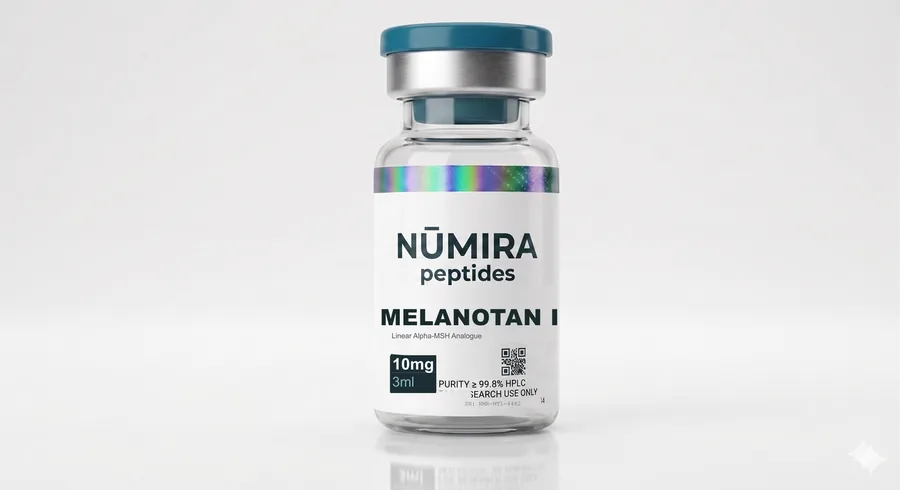
Melanotan I (Afamelanotide) is a linear analogue of alpha-MSH investigated for melanocortin receptor signaling, melanogenesis, and skin photoprotection research.
| Purity | >98% |
| Form | Lyophilized powder |
| Storage | -20°C |
Science-backed research overview for this compound
Melanotan I (also known as Afamelanotide) is a synthetic analogue of the natural alpha-melanocyte stimulating hormone (alpha-MSH). It is a linear peptide that was originally developed at the University of Arizona as a "sunless tanning" agent.
Melanotan I works by binding to the Melanocortin-1 Receptor (MC1R) on skin cells (melanocytes). This triggers the production of eumelanin, the dark pigment responsible for tanning, without the need for harmful UV exposure. This provides a natural, biological shield against the sun.
Research indicates that Melanotan I is highly effective for patients with erythropoietic protoporphyria (EPP) and other light-sensitivity disorders. It is studied for its ability to reduce DNA damage in the skin, prevent sunburn, and lower the risk of skin cancer in high-risk research models.