
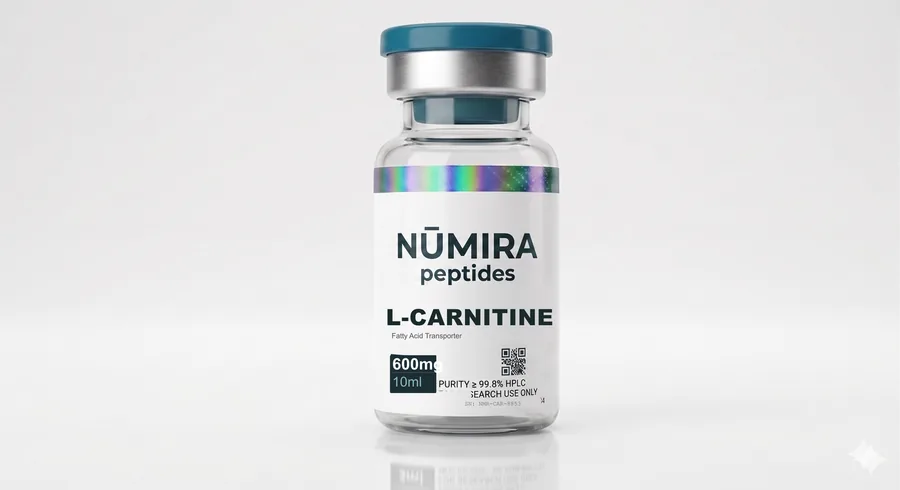
L-Carnitine is an amino acid derivative essential for fatty acid transport into mitochondria, investigated for energy metabolism, fat oxidation, cardiac function, and exercise performance research.
| Purity | >98% |
| Form | Injectable solution |
| Storage | Refrigerated 2-8°C |
Science-backed research overview for this compound
L-Carnitine is an amino acid derivative naturally produced in the body from lysine and methionine. It plays a fundamental role in energy production by transporting long-chain fatty acids into the mitochondria so they can be oxidized (burned) to produce energy.
The primary mechanism of L-Carnitine is the "carnitine shuttle." It binds to activated fatty acids (acyl-CoA) and carries them across the inner mitochondrial membrane via the enzyme carnitine palmitoyltransferase. This is the rate-limiting step for fatty acid oxidation, making L-Carnitine a central regulator of lipid metabolism.
Research focuses on its ability to enhance exercise recovery by reducing muscle damage and oxidative stress. It is also studied for its impact on cardiac health (mitochondrial support for the heart) and its role in managing insulin sensitivity and metabolic syndrome markers in animal models.