

What is L-Carnitine?
L-Carnitine is a naturally occurring amino acid derivative (synthesized from lysine and methionine) that is concentrated in tissues that use fatty acids as their primary fuel, such as skeletal and cardiac muscle. It is not a stimulant, but a critical metabolic cofactor required for energy production.
While the body can produce some L-carnitine, and it is found in red meat, research investigates the impact of "suprphysiological" levels—achieved through supplementation—on fat metabolism and exercise recovery.
⚗️ Key Research Facts
- Molecular Role: Acyl-CoA Transporter
- Target: Mitochondrial Matrix
- Primary Goal: Enhanced Beta-Oxidation
- Bioavailability (Oral): < 15%
Mechanism: The Mitochondrial Shuttle
Fatty acids are the most energy-dense fuel source in the body, but they have a problem: they cannot cross the inner mitochondrial membrane on their own. They require L-carnitine to "shuttle" them across.
Beta-Oxidation Support
L-carnitine binds to long-chain fatty acids to form **Acylcarnitine**. This complex is then transported into the mitochondrial matrix, where the fat is broken down via beta-oxidation to produce ATP. Without sufficient L-carnitine, the body's ability to burn fat for energy is significantly throttled, regardless of exercise intensity.
Oral vs. Injectable Bioavailability
The primary hurdle in L-carnitine research has always been absorption. Oral L-carnitine is poorly absorbed by the gut, with over 85% being excreted or broken down by intestinal bacteria.
| Feature | Oral L-Carnitine | Injectable L-Carnitine |
|---|---|---|
| Absorption | 5–15% (Low) | 100% (Absolute) |
| Gut Side Effects | Bloating, "Fishy" Odor | None |
| Plasma Peak | Slow & Moderate | Rapid & High |
| Research Efficacy | Mixed | Highly Consistent |
Research in Fat Loss & Performance
Research into high-bioavailability L-carnitine focuses on two main areas:
- Fat Oxidation: Increasing the rate at which the body utilizes stored fat during both rest and exercise.
- Glycogen Sparing: By training the body to burn more fat, researchers observe that muscle glycogen is preserved, potentially extending endurance in athletic models.
- Androgen Receptor Sensitivity: Some studies suggest L-carnitine may increase the density of androgen receptors in muscle cells, improving the response to natural hormones.
Research Protocols & Dosing
- Administration: Intramuscular (IM) or subcutaneous injection.
- Standard Research Dose: 500 mg to 1,000 mg daily.
- Consistency: Requires 4–6 weeks of consistent administration to fully saturate muscle carnitine stores.
- Storage: Store at room temperature away from light. Do not freeze.
Frequently Asked Questions
Does it cause the "fishy" smell?
The "fishy" body odor associated with L-carnitine is caused by the breakdown of unabsorbed carnitine by gut bacteria into trimethylamine (TMA). Because injectable L-carnitine bypasses the gut entirely, it does not produce this side effect.
Is it a stimulant?
No. L-carnitine provides energy through metabolic efficiency, not central nervous system stimulation. It does not cause jitters, heart palpitations, or sleep disturbances.
Where to buy Injectable L-Carnitine in Canada?
Nūmira Peptides offers high-concentration injectable L-Carnitine for research purposes with domestic Canadian shipping. Shop L-Carnitine →
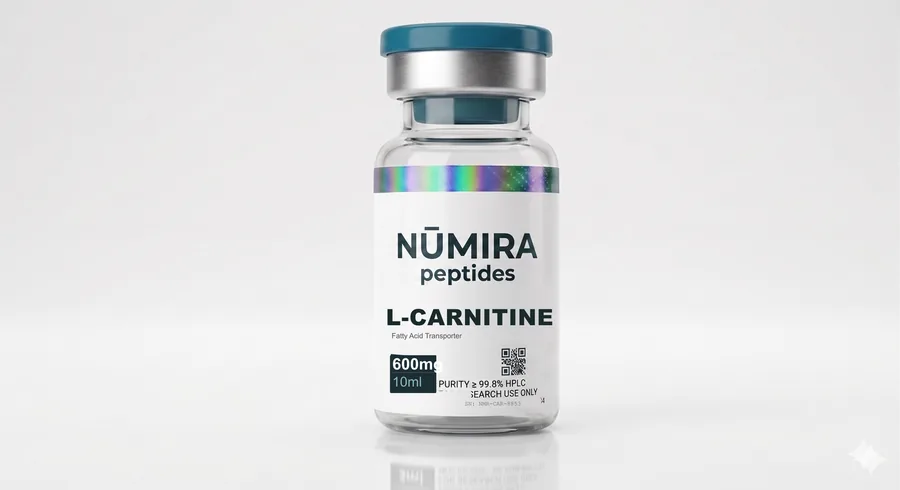
L-Carnitine — Research Grade
500mg/mL · 100% Bioavailable · Pharmaceutical Quality
Shop L-Carnitine →