What is Thymalin?
Thymalin is a biogenic peptide complex derived from the thymus gland, the "schoolhouse" where our immune cells go to learn how to fight pathogens. As we age, the thymus shrinks (involutes), which is why older individuals are more susceptible to infection and chronic disease. Thymalin was developed in Russia by Professor Vladimir Khavinson to replace the missing signals of a shrinking thymus.
In research, Thymalin is studied for its systemic effects on the endocrine and immune systems, often described as a master regulator of biological homeostasis.
⚗️ Key Research Facts
- Molecular Type: Polypeptide Complex
- Source: Thymic Extract
- Primary Goal: T-Lymphocyte Activation
- Classification: Geroprotector
Mechanism: T-Cell Differentiation
Thymalin works at the very beginning of the immune response:
- Stem Cell Guidance: It signals the bone marrow to release hematopoietic stem cells and guides them to become **T-Lymphocytes** (T-cells).
- Maturation: It provides the chemical environment needed for T-cells to mature and learn the difference between "self" and "invader," reducing the risk of autoimmune reactions.
- Cytokine Balance: Research shows it helps modulate the production of interleukins, preventing the "cytokine storms" associated with severe systemic inflammation.
Research in Immune Restoration
The core of Thymalin research is the restoration of **Immune Competence**. In subjects with chronic infections, immunodeficiencies, or those recovering from radiotherapy, Thymalin has demonstrated the ability to normalize lymphocyte counts and restore the body's natural defense mechanisms.
The Khavinson Longevity Studies
Perhaps the most famous research involving Thymalin is a 15-year clinical study on elderly subjects. The group receiving cycles of Thymalin (alongside Epitalon) showed a **significant decrease in mortality** and a lower incidence of acute respiratory diseases compared to the control group. This research positioned Thymalin as a primary agent for studying "biological age" reversal.
Anti-Aging Effects
Research suggests it can increase the lifespan of experimental animals by maintaining youthful immune function.
Tissue Regeneration
By balancing inflammation, it creates an environment where tissues can repair themselves more efficiently in research models.
Research Protocols & Dosing
- Administration: Intramuscular or Subcutaneous injection.
- Research Dose: 10 mg per day.
- Cycle Duration: typically a 10-day cycle, repeated every 6 months for longevity research.
- Side Effects: Generally very well tolerated; rare reports of mild allergic reactions or site tenderness.
- Storage: Lyophilized powder in the freezer. Reconstituted solution in the refrigerator.
Frequently Asked Questions
Is it different from Thymosin Alpha-1?
Yes. Thymosin Alpha-1 is a single, specific peptide sequence. Thymalin is a *complex* of many different thymic peptides. Research suggests they work well together, with Thymalin providing a broader signal for immune maturation.
Does it help with allergies?
By helping T-cells mature and recognize "self" more accurately, research indicates that Thymalin may help modulate the overactive immune response seen in allergic and autoimmune conditions.
Where to buy Thymalin in Canada?
Nūmira Peptides offers high-purity Thymalin (10mg) for scientific and gerontological research. Shop Thymalin →
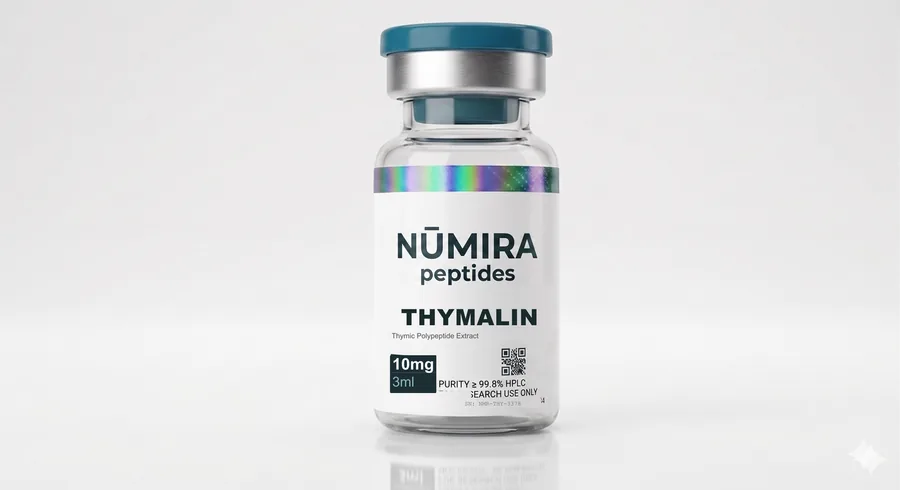
Thymalin — Research Grade
10mg Vial · High Purity · Thymic Complex · Domestic shipping
Shop Thymalin →