
What is Melanotan 1?
Melanotan 1, also known as Afamelanotide, is a synthetic peptide that mimics the activity of alpha-Melanocyte Stimulating Hormone (alpha-MSH). It was originally developed at the University of Arizona as a way to protect fair-skinned individuals from skin cancer by inducing a "protective tan" without the need for harmful UV exposure.
In clinical medicine, it is approved (as Scenesse) for the treatment of **Erythropoietic Protoporphyria (EPP)**, a rare condition where patients experience excruciating pain when exposed to even moderate amounts of light.
⚗️ Key Research Facts
- Molecular Name: [Nle4, D-Phe7]-alpha-MSH
- Target Receptor: MC1R (Selective)
- Primary Goal: Eumelanin Synthesis
- Benefit: DNA Repair & UV Shielding
Mechanism: MC1R & Eumelanin
Melanotan 1 works by binding to the **Melanocortin-1 Receptor (MC1R)** on the surface of melanocytes (pigment cells). This binding triggers a signaling cascade that tells the cell to switch its production from pheomelanin (yellow/red pigment) to **eumelanin** (black/brown pigment).
- Selective Agonism: Unlike other peptides, MT-1 is highly selective for the skin receptors, meaning it has much less impact on the receptors that control appetite or sexual function.
- DNA Repair: Research indicates that MC1R activation also stimulates the body's internal DNA repair enzymes, helping to fix damage caused by UV rays before it can lead to mutations.
Biological Photoprotection
The tanning effect of Melanotan 1 is not just cosmetic; it is a functional biological defense. Eumelanin is a highly effective "absorber" of light. By increasing the density of this pigment in the skin, MT-1 research models demonstrate a significantly higher threshold for UV-induced skin damage (sunburn) and a lower risk of light-triggered inflammation.
Melanotan 1 vs. Melanotan 2
Researchers choose between the two based on the desired side-effect profile:
| Feature | Melanotan 1 | Melanotan 2 |
|---|---|---|
| Receptor Selectivity | Highly Selective (MC1R) | Non-Selective (MC1, 3, 4, 5) |
| Tanning Potency | Strong (Natural Pace) | Extremely Strong (Fast) |
| Libido/Appetite | Minimal to No Effect | Strong Stimulation |
| Safety Profile | Clinically Approved | Unapproved/Experimental |
Research Protocols & Dosing
- Administration: Subcutaneous injection.
- Research Dose: 1 mg to 2 mg per day during the loading phase.
- Frequency: Daily for 14–21 days, then 2–3 times weekly for maintenance.
- Side Effects: Mild nausea (immediately after injection), flushing, and darkening of existing freckles or moles.
- Storage: Lyophilized powder in the freezer. Reconstituted solution in the refrigerator.
Frequently Asked Questions
Do I still need sunscreen?
In research models, MT-1 provides a significant level of "base" protection (often estimated as a natural SPF of 3–5), but it is not a complete replacement for standard sun protection in high-UV environments.
Does it cause permanent tanning?
No. Like a natural tan, the effects of MT-1 will fade over several months as the skin naturally exfoliates and the melanin levels return to their genetic baseline.
Where to buy Melanotan 1 in Canada?
Nūmira Peptides offers high-purity Melanotan 1 for scientific and dermatological research. Shop Melanotan 1 →
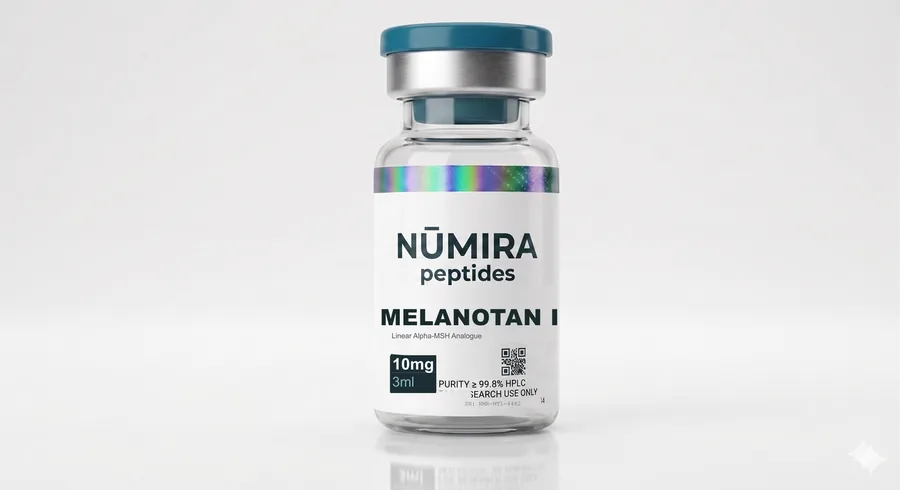
Melanotan 1 — Research Grade
10mg Vial · High Purity · Selective MC1R Agonist · Domestic shipping
Shop Melanotan 1 →