
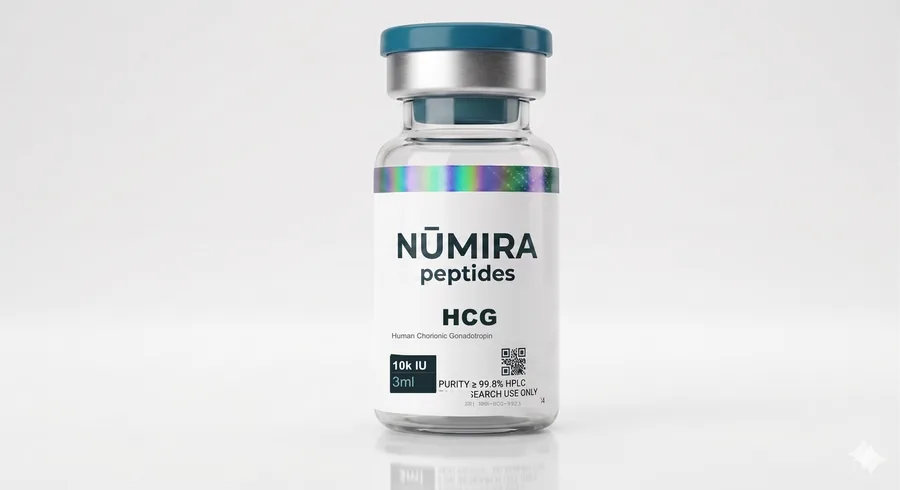
HCG (Human Chorionic Gonadotropin) is a glycoprotein hormone investigated for LH receptor activation, testosterone synthesis, Leydig cell function, and reproductive endocrinology research.
| Purity | >98% |
| Form | Lyophilized powder |
| Storage | -20°C |
Science-backed research overview for this compound
HCG (Human Chorionic Gonadotropin) is a glycoprotein hormone produced by the placenta during pregnancy. In research, it is highly valued for its ability to mimic Luteinizing Hormone (LH), the primary signal for testosterone production in males.
HCG works by binding to the LH receptors on the Leydig cells in the testes. This signals the cells to produce testosterone and maintain testicular volume, even when the natural production of LH is suppressed (for example, during hormonal replacement therapy research).
HCG is a cornerstone of research into the Hypothalamic-Pituitary-Gonadal (HPG) axis. It is studied for its role in maintaining fertility, preventing testicular atrophy, and as a diagnostic tool for assessing Leydig cell function. It is also investigated for its potential neuroprotective effects in the central nervous system.