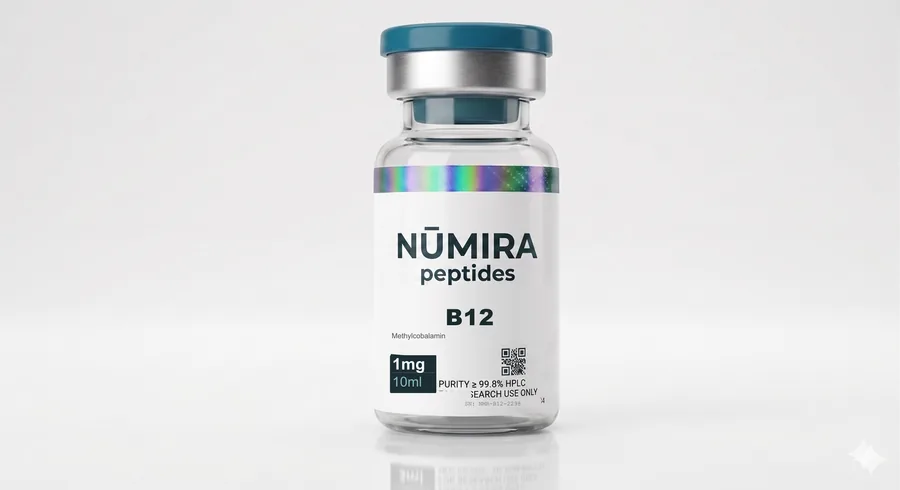
Methylcobalamin (B12) is the active, methylated form of vitamin B12 investigated for neurological function, DNA methylation, homocysteine metabolism, and red blood cell formation research.
| Purity | >98% |
| Form | Injectable solution |
| Storage | Refrigerated 2-8°C |
Science-backed research overview for this compound
Methylcobalamin is one of the two naturally occurring active coenzyme forms of Vitamin B12. Unlike cyanocobalamin (which must be converted by the liver), methylcobalamin is already in its bioactive form, making it the preferred subject for neurological research.
Methylcobalamin acts as a critical cofactor for the enzyme methionine synthase. This enzyme is responsible for converting homocysteine into methionine, a process vital for DNA synthesis, red blood cell production, and the maintenance of the myelin sheath that protects nerves.
Research indicates that Methylcobalamin supports nerve regeneration and neuronal survival. It is studied for its potential in treating peripheral neuropathy, improving cognitive function, and optimizing cellular energy levels by supporting healthy mitochondrial metabolism.