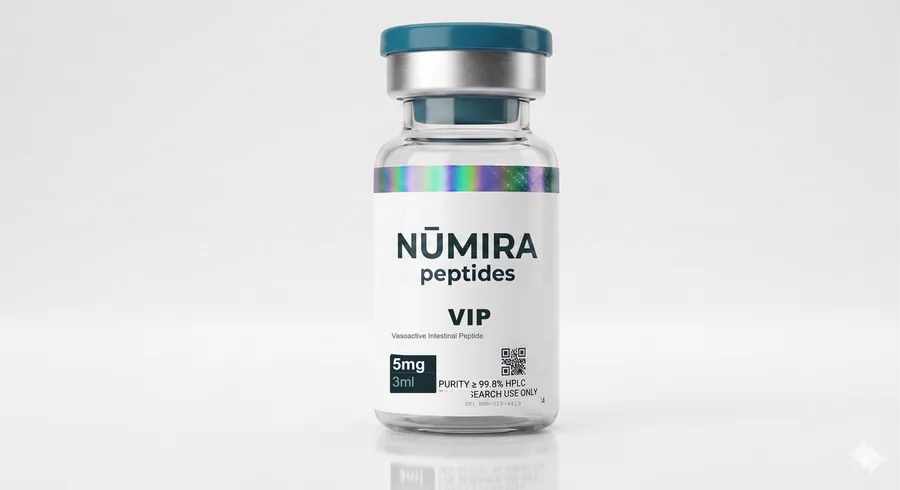
What is VIP?
Vasoactive Intestinal Peptide (VIP) is a naturally occurring peptide hormone that was first isolated from the intestine but is now known to be produced throughout the body, including the brain and immune cells. It belongs to the glucagon/secretin superfamily and serves as a critical link between the nervous and immune systems.
In research models, VIP is distinguished for its "cytoprotective" effects—protecting cells from damage caused by chronic inflammation, oxidative stress, and toxic environmental exposures.
⚗️ Key Research Facts
- Sequence: 28 Amino Acid Neuropeptide
- Class: Immunomodulatory Neuropeptide
- Primary Receptors: VPAC1 and VPAC2
- Key Effect: Potent Broncho- and Vasodilation
Mechanism: VPAC1 & VPAC2 Signaling
VIP exerts its effects by binding to the **VPAC1** and **VPAC2** receptors, which are widely expressed on immune cells and smooth muscle cells. This binding increases intracellular **cAMP** levels, initiating a cascade of protective responses:
- Cytokine Shift: Inhibits the production of pro-inflammatory cytokines (TNF-α, IL-12, IL-6) while promoting anti-inflammatory signals (IL-10).
- Smooth Muscle Relaxation: Directly induces the relaxation of blood vessels and airways, improving circulation and breathing.
COPD & Respiratory Repair
One of the most promising areas of VIP research is in Chronic Obstructive Pulmonary Disease (COPD) and Pulmonary Arterial Hypertension (PAH). In these conditions, chronic inflammation leads to the destruction of lung tissue and the narrowing of airways.
Airway Remodeling
Research suggests VIP can inhibit the excessive growth of smooth muscle in the lungs, preventing the permanent narrowing of airways.
Alveolar Protection
Protects the delicate air sacs (alveoli) from death induced by environmental toxins like cigarette smoke.
Autoimmune & Systemic Inflammation
Because it can "calm" overactive immune cells (like macrophages and T-cells), VIP is a focus for researchers studying autoimmune conditions such as Rheumatoid Arthritis and Multiple Sclerosis. Research models show that VIP can help restore the balance of the immune system, preventing it from attacking the body's own structural proteins.
Research Protocols & Dosing
- Administration: Nasal spray (for neurological/respiratory research) or subcutaneous injection.
- Research Dose: Typically 50 mcg to 200 mcg per administration.
- Frequency: Often administered 2–4 times per day due to its rapid clearance.
- Safety: Generally well-tolerated. Excessive doses can cause temporary facial flushing or a drop in blood pressure due to its vasodilatory effects.
Frequently Asked Questions
Is VIP used for "Mould Illness" (CIRS)?
In certain research communities (such as the Shoemaker Protocol), VIP nasal spray is studied for its potential to restore hormonal balance and reduce brain inflammation in subjects with Chronic Inflammatory Response Syndrome (CIRS).
How does VIP affect digestion?
While named "intestinal peptide," its primary role in the gut is to regulate blood flow and the secretion of water and electrolytes, helping to maintain a healthy intestinal environment in research models.
Where to buy VIP in Canada?
Nūmira Peptides offers laboratory-grade VIP for research and scientific studies with domestic shipping across Canada. Shop VIP →