
What is Kisspeptin-10?
Kisspeptin-10 is a decapeptide (10 amino acids) representing the minimum sequence required for full biological activity of the kisspeptin protein. Discovered in 1996 as a tumor suppressor (metastin), kisspeptin was later found to be the critical "switch" that initiates puberty and regulates adult reproductive function.
In research models, Kisspeptin-10 is used to study the regulation of the **Hypothalamic-Pituitary-Gonadal (HPG) axis** and its response to various environmental and metabolic stressors.
⚗️ Key Research Facts
- Target: KISS1R (GPR54) Receptor
- Primary Function: GnRH Pulse Stimulation
- Clinical Interest: Fertility, Hypogonadism, IVF
- Sequence: Tyr-Asn-Trp-Asn-Ser-Phe-Gly-Leu-Arg-Phe-NH2
Mechanism: The HPG Axis Trigger
The secretion of reproductive hormones is a top-down cascade. Kisspeptin sits at the very top of this hierarchy in the hypothalamus.
Binding to KISS1R
Kisspeptin-10 binds to the **KISS1R** receptors located on GnRH-secreting neurons. This triggers the pulsatile release of Gonadotropin-Releasing Hormone (GnRH) into the pituitary portal system.
LH & FSH Secretion
The GnRH pulse then stimulates the anterior pituitary gland to release Luteinizing Hormone (LH) and Follicle-Stimulating Hormone (FSH). These hormones then signal the gonads (testes or ovaries) to produce sex steroids like testosterone and estrogen.
Research in Fertility & Ovulation
One of the most promising areas of kisspeptin research is in **In Vitro Fertilization (IVF)**. Traditional IVF triggers ovulation using HCG, which carries a risk of Ovarian Hyperstimulation Syndrome (OHSS).
Research suggests that Kisspeptin-10 can trigger a more "physiological" LH surge that is sufficient for ovulation but carries a significantly lower risk of complications, potentially making fertility treatments safer in the future.
Endogenous Testosterone Stimulation
In male research models, Kisspeptin-10 has been shown to rapidly increase LH and testosterone levels. Unlike exogenous testosterone therapy, which suppresses the body's natural HPG axis, Kisspeptin-10 stimulates the axis from the top down.
- Restoring Pulsatility: Potential to restart natural hormone rhythms after suppression.
- Preserving Fertility: By maintaining GnRH and FSH signaling, it may preserve spermatogenesis in research models.
Research Protocols & Dosing
- Administration: Subcutaneous or intravenous injection.
- Trial Dose: Typically 1 mcg/kg to 10 mcg/kg as a bolus injection.
- Duration: Often used as single injections or short-term daily protocols in research.
- Storage: Lyophilized powder should be stored in the freezer. Reconstituted solution is stable for up to 7 days when refrigerated.
Frequently Asked Questions
Is Kisspeptin better than HCG?
They act at different levels. HCG mimics LH directly at the testes/ovaries. Kisspeptin acts higher up in the brain to trigger the body's own LH release. Research considers kisspeptin more "natural" in its signaling pattern.
Does Kisspeptin cause side effects?
Clinical studies report it as well-tolerated, with occasional mild headaches or injection site reactions. The long-term effects of chronic top-down stimulation are still being researched.
Where to buy Kisspeptin in Canada?
Nūmira Peptides offers high-purity Kisspeptin-10 for laboratory research. Shop Kisspeptin →
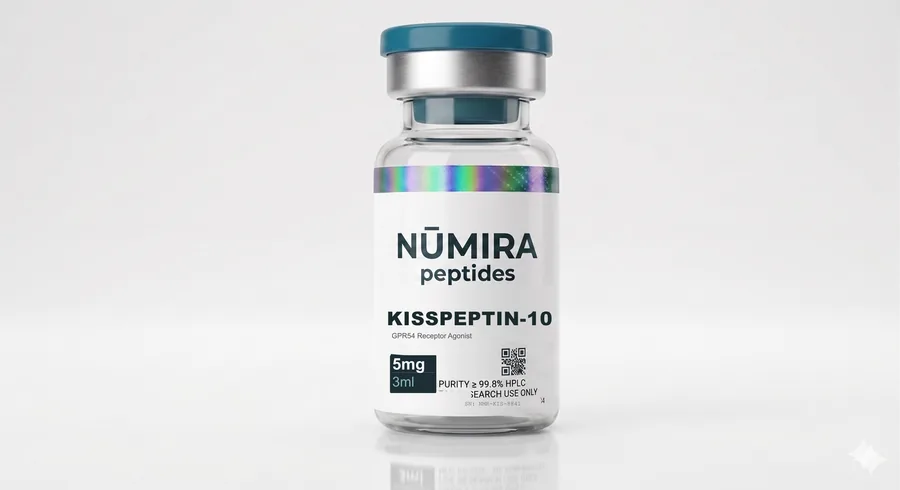
Kisspeptin-10 — Research Grade
Purity >98% · HPG Axis Regulator · Third-party tested
Shop Kisspeptin →