
What is Kisspeptin-10?
Kisspeptin-10 is a 10-amino acid fragment of the larger Kiss-1 protein. It was originally discovered for its role in suppressing the spread of cancer (metastasis-suppressor), but scientists soon realized its much more fundamental role in human biology: it is the signal that tells the body it is time to begin puberty and maintain reproductive health.
In research, Kisspeptin-10 is studied for its ability to correct hormonal imbalances by working "upstream"—stimulating the brain's natural control centers rather than just adding synthetic hormones to the blood.
⚗️ Key Research Facts
- Molecular Type: Decapeptide
- Primary Receptor: KISS1R (GPR54)
- Function: GnRH Secretagogue
- Role: Master Regulator of HPG Axis
Mechanism: The KISS1 Receptor
Kisspeptin-10 works through a highly specific pathway in the hypothalamus:
- Binding: It binds to the **KISS1R (GPR54)** receptors located directly on GnRH-producing neurons.
- GnRH Pulse: This binding triggers a pulsatile release of Gonadotropin-Releasing Hormone (GnRH).
- Gonadotropin Surge: The GnRH travels to the pituitary, signaling the release of Luteinizing Hormone (LH) and Follicle-Stimulating Hormone (FSH), which then travel to the gonads to produce testosterone or estrogen.
Research in Male & Female Fertility
Because it stimulates natural LH/FSH pulses, Kisspeptin-10 is a major subject for fertility research:
Ovulation Induction
Research investigates Kisspeptin as a safer alternative to hCG for triggering ovulation in IVF, reducing the risk of Ovarian Hyperstimulation Syndrome (OHSS).
Spermatogenesis
In male research models, it supports the natural production of sperm by maintaining healthy FSH levels without suppressing the axis.
HPG Axis "Restart" Studies
One of the most popular areas of Kisspeptin-10 research involves "restarting" the natural hormone production in subjects whose HPG axis has been suppressed by exogenous steroids or illness. Unlike Clomid or HCG, which work at the pituitary or testicular level, Kisspeptin works at the very top of the chain (the hypothalamus), potentially offering a more complete recovery of natural rhythms.
Research Protocols & Dosing
- Administration: Subcutaneous injection.
- Research Dose: 100 mcg to 200 mcg per administration.
- Frequency: Typically administered once daily or several times per week depending on the goal.
- Side Effects: Generally well-tolerated; primary observations include mild site irritation or transient flushing.
- Storage: Lyophilized powder in the freezer. Reconstituted solution in the refrigerator.
Frequently Asked Questions
Does it raise testosterone?
In research, Kisspeptin-10 causes a rapid, dose-dependent rise in LH, which directly leads to an increase in endogenous testosterone production. This makes it a subject for hypogonadism research.
Is it better than HCG?
They work differently. HCG mimics LH and works at the testes. Kisspeptin-10 works at the hypothalamus to make your body produce its *own* LH. Many researchers consider Kisspeptin to be more "physiological" as it engages the entire hormonal cascade.
Where to buy Kisspeptin-10 in Canada?
Nūmira Peptides offers high-purity Kisspeptin-10 for endocrine and reproductive research. Shop Kisspeptin-10 →
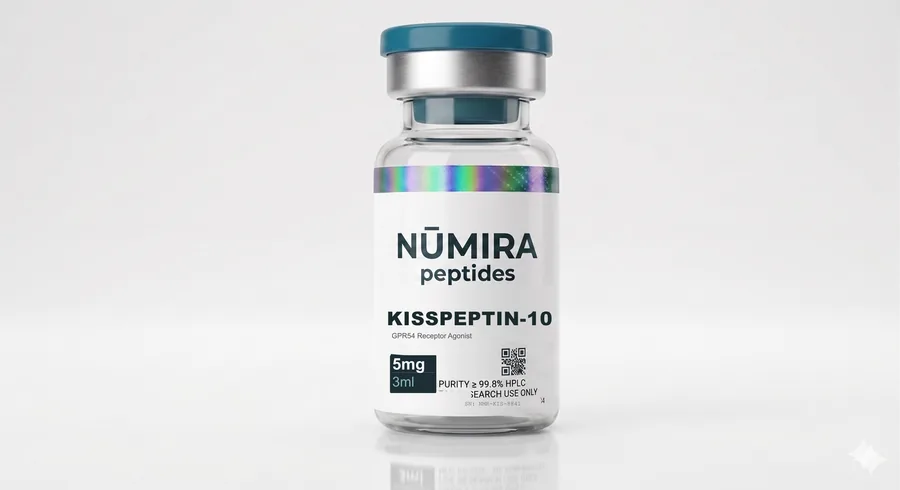
Kisspeptin-10 — Research Grade
10mg Vial · High Purity · HPG Axis Gatekeeper · Domestic shipping
Shop Kisspeptin-10 →