What is IGF-1 LR3?
IGF-1 is the primary mediator of the effects of Growth Hormone (GH). When GH reaches the liver, it signals the production of IGF-1, which then travels to the muscles to stimulate growth. However, natural IGF-1 is very unstable and lasts only minutes in the blood. IGF-1 LR3 was engineered to be more stable, more potent, and resistant to the proteins that normally deactivate it.
In scientific research, IGF-1 LR3 is considered the "holy grail" of anabolic signaling due to its direct action on muscle tissue maturation.
⚗️ Key Research Facts
- Molecular Type: Recombinant Peptide
- Modification: Arginine at position 3 + 13-AA extension
- Primary Goal: Muscle Cell Proliferation
- Half-Life: 20–30 Hours
Mechanism: Hyperplasia vs. Hypertrophy
Most anabolic substances only cause **Hypertrophy** (making existing cells bigger). IGF-1 LR3 research is famous for investigating **Hyperplasia**:
- New Fiber Creation: It stimulates the division of cells to create entirely new muscle fibers, effectively increasing the genetic "ceiling" for muscle mass.
- Protein Synthesis: It activates the mTOR pathway more aggressively than almost any other growth factor, leading to rapid accumulation of contractile proteins.
- Nutrient Partitioning: Research indicates it shuttles glucose and amino acids into muscle cells while inhibiting their storage in fat cells.
Satellite Cell Activation
The secret to IGF-1 LR3's power lies in its impact on **Satellite Cells**. These are "dormant" stem cells located on the surface of muscle fibers. Research shows that IGF-1 LR3 "wakes up" these cells, causing them to fuse with existing fibers to add new nuclei. More nuclei mean more capacity for protein synthesis and repair.
Connective Tissue Repair
Promotes the synthesis of collagen in tendons and ligaments, supporting structural integrity alongside muscle growth.
Systemic Anabolism
Unlike IGF-1 DES (which is localized), the LR3 version provides a systemic growth signal that reaches all muscle groups.
Why the "LR3" Modification Matters
The "Long R3" modification prevents the peptide from binding to **IGFBP (IGF-Binding Proteins)**. These proteins act like a sponge, soaking up natural IGF-1 and keeping it from its receptors. Because LR3 doesn't bind to the sponge, it remains free to interact with receptors for up to 24 hours, making it significantly more effective in research models.
Research Protocols & Dosing
- Administration: Subcutaneous or Intramuscular injection.
- Research Dose: 20 mcg to 50 mcg per day.
- Cycle Duration: Typically 4 weeks on, 4 weeks off to prevent receptor down-regulation.
- Side Effects: Hypoglycemia, joint pain, water retention, and potential for abnormal tissue growth if used long-term without breaks.
- Storage: Must be kept refrigerated (2–8°C). Stable for up to 2 years in lyophilized form.
Frequently Asked Questions
Does it cause "GH Gut"?
While high doses of Growth Hormone can lead to visceral organ growth, research indicates that the specific, targeted use of IGF-1 LR3 in short cycles is less likely to cause this effect compared to chronic GH abuse.
Can I use it for injury repair?
Yes. Many researchers use IGF-1 LR3 specifically for its impact on satellite cells and collagen synthesis to accelerate the repair of muscle tears and tendon injuries.
Where to buy IGF-1 LR3 in Canada?
Nūmira Peptides offers high-purity IGF-1 LR3 (1mg) for laboratory and scientific research. Shop IGF-1 LR3 →
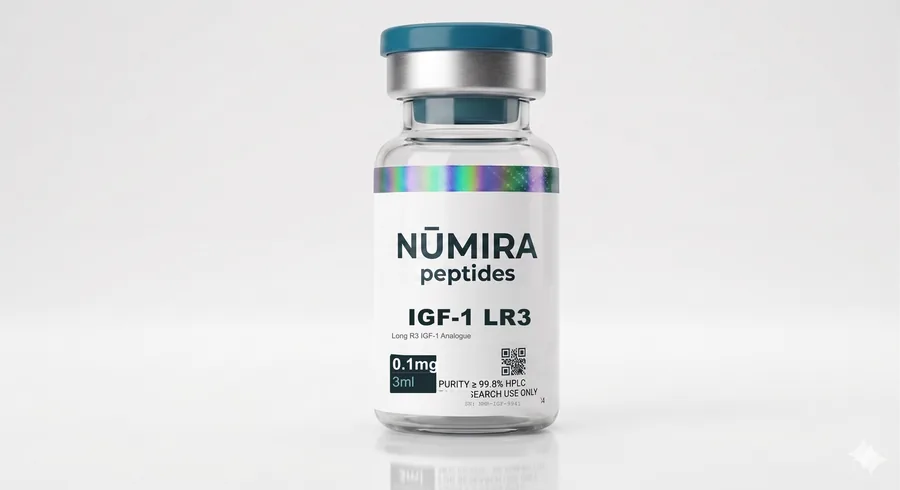
IGF-1 LR3 — Research Grade
1mg Vial · High Purity · Hyperplasia Catalyst · Domestic shipping
Shop IGF-1 LR3 →