

What is Hexarelin?
Hexarelin is a synthetic analogue of the hormone ghrelin. It belongs to the same family as GHRP-2 and GHRP-6 but is widely considered the most potent of the three in terms of raw growth hormone output. It is a hexapeptide containing six amino acids.
In research, Hexarelin is studied not only for its endocrine effects but also as a "cardioprotective" agent, with studies investigating its role in recovering heart function after ischemic events (heart attacks).
⚗️ Key Research Facts
- Potency: Highest among GHRPs
- Target Receptors: GHS-R1a & CD36
- Primary Goal: GH Stimulation & Cardioprotection
- Molecular Weight: 887.05 g/mol
Mechanism: GH Release & CD36 Binding
Hexarelin works through a "dual-receptor" pathway that sets it apart from other secretagogues:
- GHS-R1a (Ghrelin Receptor): Triggers the pituitary to release pulses of growth hormone.
- CD36 Receptor: Found in the heart and blood vessels. Binding to CD36 is believed to be the mechanism behind Hexarelin's direct heart-protective effects.
Cardiovascular Cytoprotection
Perhaps the most exciting area of Hexarelin research is its impact on the heart. Unlike full HGH, which can sometimes strain the heart at high doses, Hexarelin has shown the ability to:
Improve Ejection Fraction
Research models observe an increase in the heart's ability to pump blood efficiently.
Inhibit Apoptosis
Protects heart muscle cells (cardiomyocytes) from dying after being deprived of oxygen.
Muscle & Connective Tissue Repair
Like other GHRPs, the massive pulse of growth hormone and downstream IGF-1 provided by Hexarelin supports systemic tissue repair. It is a focus for research into skeletal muscle recovery and the strengthening of tendons and ligaments.
Research Protocols & Dosing
- Administration: Subcutaneous injection.
- Research Dose: 100 mcg to 200 mcg per administration.
- Frequency: 2–3 times per day.
- Cycle Management: Often researched in cycles of 4 weeks on, followed by 4 weeks off to maintain pituitary sensitivity.
- Side Effects: Flushing, tingling in the hands, and transient water retention.
- Storage: Lyophilized powder in the freezer. Reconstituted solution in the refrigerator.
Frequently Asked Questions
Does it cause hunger like GHRP-6?
Hexarelin causes significantly less hunger than GHRP-6. While it still activates the ghrelin receptor, it is much more "selective" for growth hormone release than for appetite stimulation.
Can it raise cortisol?
Yes. At higher research doses, Hexarelin can cause a temporary rise in cortisol and prolactin. This is generally considered a "dose-dependent" side effect and is less pronounced at lower concentrations.
Where to buy Hexarelin in Canada?
Nūmira Peptides provides pharmaceutical-grade Hexarelin for laboratory and cardiovascular research. Shop Hexarelin →
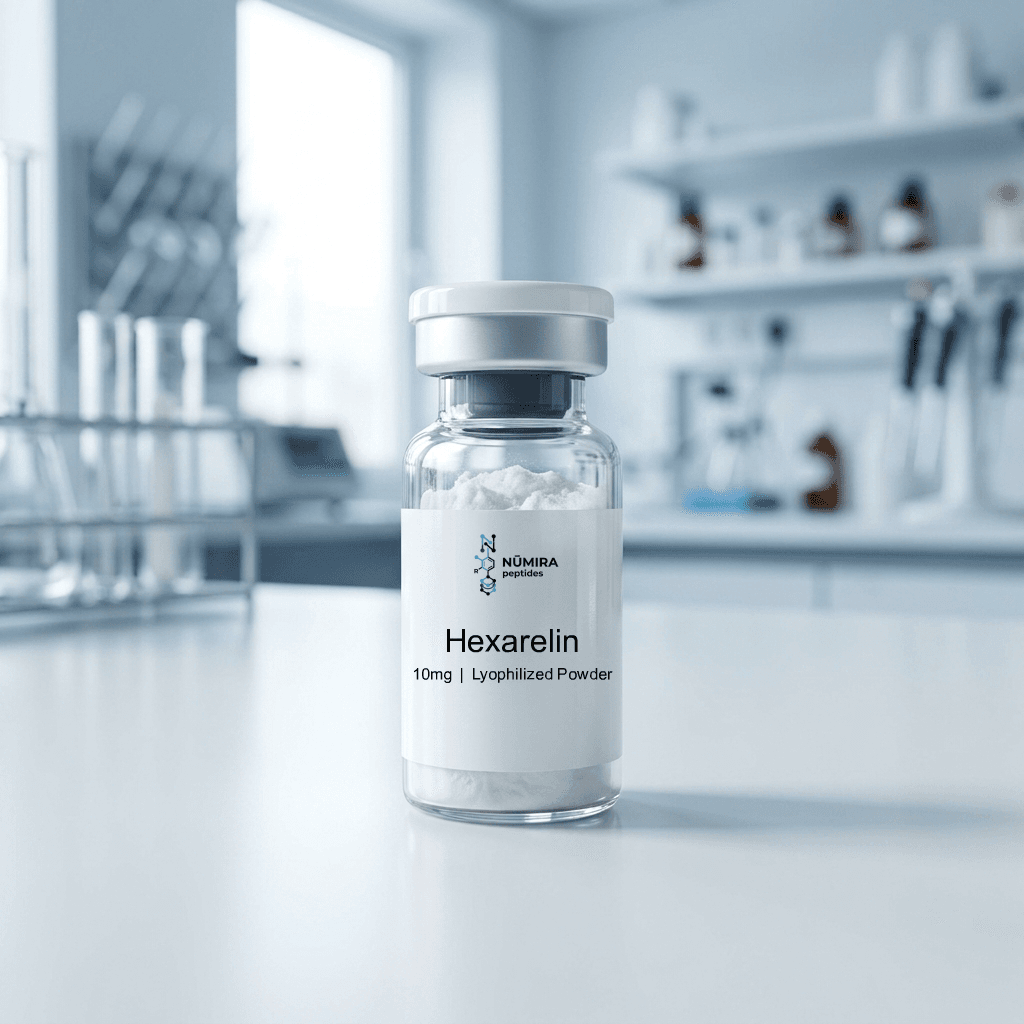
Hexarelin — Research Grade
Purity >98% · Potent Cardioprotective GHS · Third-party tested
Shop Hexarelin →