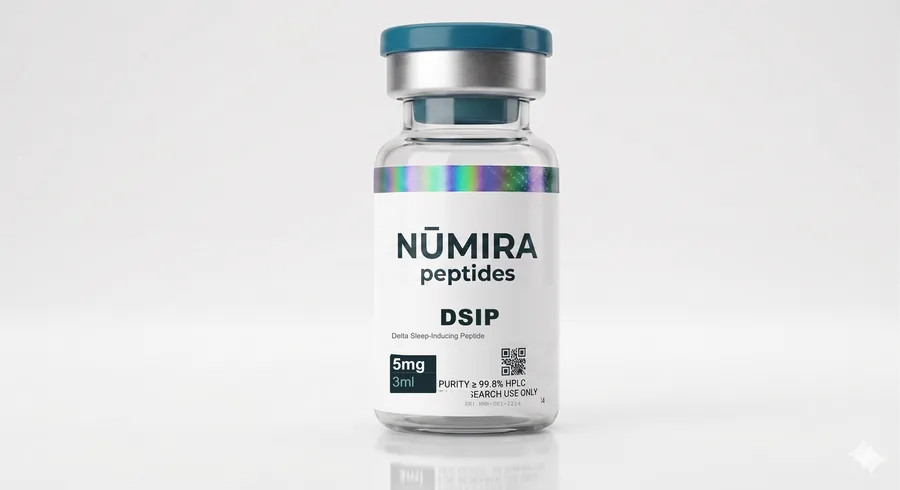

What is DSIP?
Delta Sleep-Inducing Peptide (DSIP) is an endogenous peptide found in the brain, pituitary gland, and various organs. It was originally isolated from the cerebral venous blood of rabbits in a state of induced sleep. Unlike many pharmaceutical sedatives, DSIP does not act as a traditional hypnotic; rather, it appears to act as a global neuromodulator that stabilizes the sleep-wake cycle.
⚗️ Key Research Facts
- Sequence: Trp-Ala-Gly-Gly-Asp-Ala-Ser-Gly-Glu
- Primary Effect: Slow-wave (Delta) Sleep Promotion
- Secondary Role: Stress resistance and HPA axis regulation
- Discovery: 1977 (Monnier et al.)
Mechanism: Delta Wave Induction
Slow-wave sleep (SWS), or Delta sleep, is the deepest and most restorative stage of sleep. This is when the body performs essential physiological tasks like tissue repair, memory consolidation, and hormone release.
GABAergic & Glutamatergic Interaction
Research indicates that DSIP interacts with the GABAergic system to reduce neuronal excitability and with glutamatergic (NMDA/AMPA) receptors to modulate synaptic plasticity. This dual action helps the brain transition more effectively into the rhythmic, synchronized firing patterns characteristic of Delta waves.
REM Preservation
A significant finding in DSIP research is that it promotes deep sleep without suppressing **REM (Rapid Eye Movement)** sleep. Many traditional sleep aids significantly disrupt REM cycles, which are critical for emotional regulation and cognitive health.
Stress & HPA Axis Modulation
DSIP is frequently studied for its "adaptogenic" properties. It appears to help maintain homeostasis during periods of physical and psychological stress by modulating the **Hypothalamic-Pituitary-Adrenal (HPA) axis**.
- Cortisol Regulation: Research suggests DSIP can lower elevated cortisol levels, preventing the "wired but tired" state.
- ACTH Inhibition: Modulates the release of Adrenocorticotropic hormone, the primary trigger for the stress response.
- Neuroprotection: Protects brain cells from oxidative damage during chronic stress exposure.
Physical Recovery & Endocrine Support
Deep sleep is the primary driver of physical recovery. By enhancing the duration and quality of Delta sleep, DSIP research shows potential for secondary endocrine benefits:
GH & LH Support
Promotes the natural, pulsatile release of Growth Hormone and Luteinizing Hormone during deep sleep stages.
Immune Function
Supports the production of T-cells and cytokines that are essential for innate immune defense during the night.
Research Protocols & Dosing
- Administration: Subcutaneous injection (most common) or intranasal.
- Research Dose: 100 mcg to 300 mcg.
- Timing: Administered 30–60 minutes before the intended sleep period.
- Frequency: In research models, it is often used for 3–5 consecutive nights followed by a break to assess baseline improvements.
Frequently Asked Questions
Does DSIP cause morning grogginess?
Unlike benzodiazepines or many over-the-counter sleep aids, DSIP research does not typically report significant "hangover" effects because it enhances natural sleep architecture rather than forcing sedation.
Can DSIP help with chronic pain?
Some research suggests DSIP has analgesic properties, potentially by influencing opioid receptor sensitivity and reducing the stress-induced pain threshold.
Where to buy DSIP in Canada?
Nūmira Peptides offers high-purity DSIP for research purposes with reliable shipping across Canada. Shop DSIP →