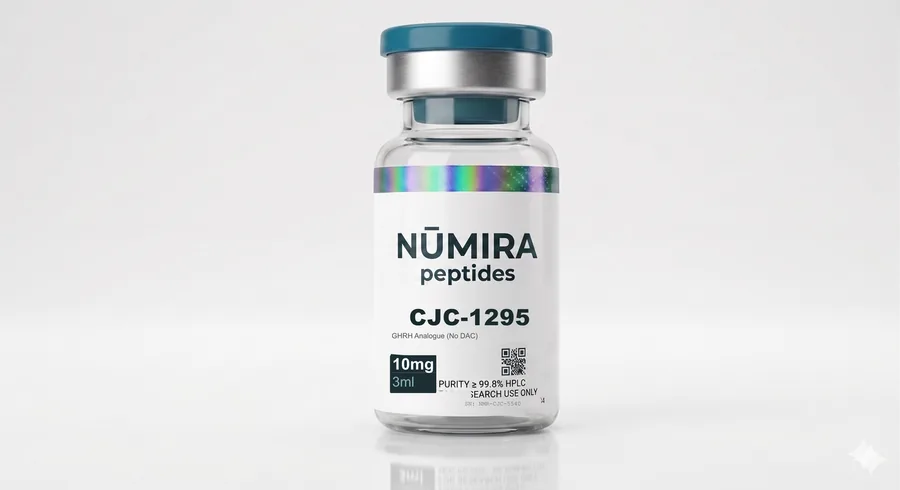
What is CJC-1295?
CJC-1295 is a synthetic 29-amino acid peptide analogue of Growth Hormone Releasing Hormone (GHRH). Specifically, it is a modified version of the 1-29 fragment of GHRH, which is the smallest part of the molecule that retains full biological activity.
By mimicking the natural hormone, CJC-1295 binds to GHRH receptors in the pituitary gland, stimulating the production and release of growth hormone. It is a cornerstone of research into aging, muscle recovery, and metabolic disorders.
DAC vs. No DAC (Mod GRF 1-29)
The most common confusion in peptide research is the distinction between these two forms. The addition of the Drug Affinity Complex (DAC) fundamentally changes the peptide's behavior.
CJC-1295 No DAC (Mod GRF 1-29)
This version has a half-life of approximately 30 minutes. It is designed to stimulate a "pulse" of growth hormone, mimicking the body's natural physiological secretion pattern. Because it is cleared quickly, it does not lead to "GH Bleed" (sustained elevation that can downregulate receptors).
CJC-1295 With DAC
The DAC modification allows the peptide to bind to serum albumin in the blood, extending its half-life to 6–8 days. A single dose can elevate GH levels for over a week. This version is studied for its convenience but is often scrutinized for its non-physiological, sustained release pattern.
| Feature | CJC-1295 No DAC | CJC-1295 With DAC |
|---|---|---|
| Half-Life | ~30-60 mins | ~7 days |
| Release Pattern | Pulsatile | Sustained (GH Bleed) |
| Dosing Frequency | Daily (1-3x) | Weekly (1-2x) |
Mechanism of GH Stimulation
Both versions work by stimulating the somatotroph cells in the anterior pituitary. Unlike GHRPs (like Ipamorelin) which act on the ghrelin receptor, CJC-1295 acts directly on the GHRH receptor. This results in:
- Increased GH Synthesis: Telling the pituitary to make more growth hormone.
- Increased GH Secretion: Triggering the release of the stored hormone.
- Elevated IGF-1: Sustained GH release eventually raises systemic Insulin-like Growth Factor-1.
The Ipamorelin Stack
In most research settings, CJC-1295 No DAC is "stacked" with **Ipamorelin**. While CJC-1295 provides the GHRH stimulus (making more GH available), Ipamorelin acts as a GHRP (Growth Hormone Releasing Peptide) to trigger a larger release. Together, they create a synergistic effect that produces a much larger GH pulse than either peptide could achieve alone.
Research Protocols & Dosing
- No DAC Dose: Typically 100 mcg per injection, 1–3 times per day.
- With DAC Dose: 1 mg to 2 mg, once or twice per week.
- Timing: Best administered on an empty stomach (3 hours post-meal) and before bed to align with natural GH secretion.
- Storage: Store lyophilized powder in the freezer. Reconstituted solution must be refrigerated and used within 14 days.
Frequently Asked Questions
Which version is better for fat loss?
Both versions can aid in fat metabolism by increasing GH. However, many researchers prefer the "No DAC" version because the pulsatile release is less likely to cause insulin resistance or receptor downregulation.
Does CJC-1295 cause hunger?
No. Unlike GHRP-2 or GHRP-6, CJC-1295 does not affect the ghrelin receptor and typically does not increase appetite in research models.
Where to buy CJC-1295 in Canada?
Nūmira Peptides offers high-purity CJC-1295 in both DAC and No DAC (Mod GRF 1-29) variants. Shop CJC-1295 →