What Is Cerebrolysin?
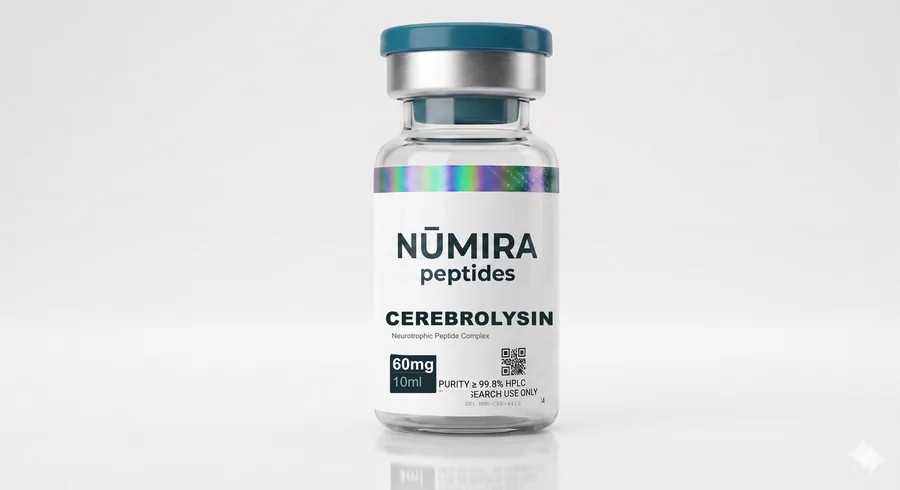
Cerebrolysin is a preparation of enzymatically treated porcine brain-derived peptides. The active fraction consists of peptides under 10 kDa that can cross the blood-brain barrier (BBB). Unlike single-target drugs, Cerebrolysin contains a mixture of neurotrophic peptide fragments that collectively mimic BDNF, NGF, GDNF, and CNTF signaling.
First developed in Austria, it has been studied in over 200 clinical trials worldwide, primarily for stroke recovery, traumatic brain injury, and neurodegenerative disease models.
⚗️ Key Facts
- Composition: 25% low-MW neuropeptides, 75% free amino acids
- BBB crossing: Active peptides are small enough to cross the blood-brain barrier
- Mimics: BDNF, NGF, GDNF, CNTF activity profiles
- Clinical trials: 200+ published studies
Mechanism of Action
Neurotrophic Factor Mimicry
Cerebrolysin's peptide fractions activate the same intracellular signaling cascades as endogenous neurotrophic factors — including PI3K/Akt, MAPK/ERK, and JAK/STAT pathways. This promotes neuronal survival, differentiation, and synaptic plasticity.
BDNF-Like Activity
Research shows Cerebrolysin upregulates brain-derived neurotrophic factor (BDNF) expression and activates its receptor TrkB. BDNF is critical for synaptic plasticity, learning, memory, and neuronal survival — making this pathway central to Cerebrolysin's cognitive effects.
Neuroprotection
The preparation reduces excitotoxicity, inhibits calpain-mediated neuronal death, and decreases oxidative stress in injured brain tissue. In ischemic stroke models, it reduces infarct volume and improves functional outcomes.
Neurogenesis & Synaptogenesis
Cerebrolysin promotes formation of new neurons in the hippocampus and subventricular zone, and increases synaptic density in cortical areas — effects linked to improved cognitive function in aging models.
Key Research Areas
Stroke Recovery
Meta-analyses show improved functional outcomes when administered within 72 hours of acute ischemic stroke (Bornstein et al., 2018).
Traumatic Brain Injury
Reduces secondary injury cascades and improves cognitive recovery in TBI models through neuroprotective and neurotrophic mechanisms.
Alzheimer's Research
Clinical trials showed improvements in cognitive and functional scales in mild-to-moderate AD patients over 6-month treatment periods.
Cognitive Enhancement
Improves memory, attention, and executive function in age-related cognitive decline models through enhanced synaptic plasticity.
Research Dosing
- Clinical stroke trials: 30–50 mL IV daily for 10–21 days
- Cognitive research: 10–30 mL IV daily for 20-day cycles
- Animal models: 2.5–5 mL/kg intraperitoneally
FAQ
Can Cerebrolysin cross the blood-brain barrier?
Yes. The active neuropeptide fractions are under 10 kDa, allowing them to cross the BBB and act directly on CNS tissue.
How does Cerebrolysin differ from single neurotrophic factors?
It contains a mixture of peptide fragments that simultaneously activate multiple neurotrophic pathways (BDNF, NGF, GDNF, CNTF), providing broader neuroprotective coverage than any single factor.
Where to buy Cerebrolysin in Canada?
Nūmira Peptides supplies research-grade Cerebrolysin. View Cerebrolysin →