What is AHK-Cu?
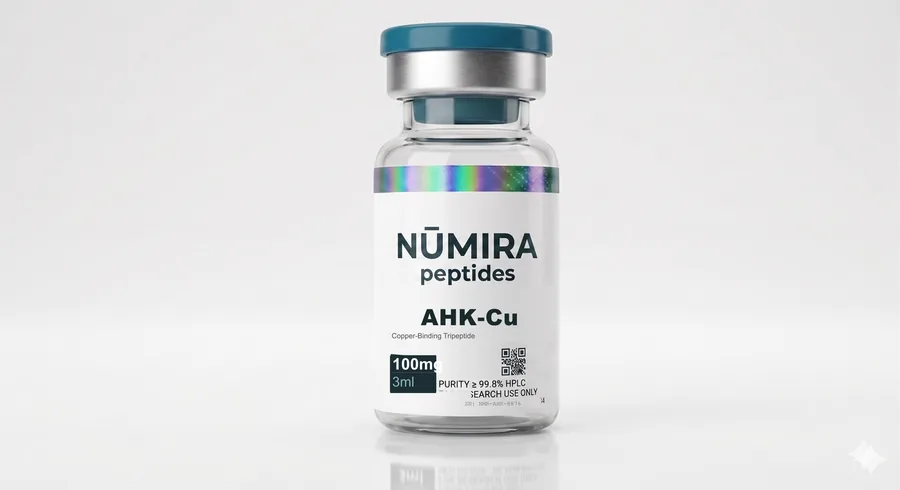
AHK-Cu, also known as Copper Tripeptide-3, is a synthetic peptide consisting of three amino acids (Alanine, Histidine, and Lysine) bound to a copper ion. While it belongs to the same family as the famous GHK-Cu, AHK-Cu has been specifically engineered and researched for its affinity for the scalp and hair follicles.
Copper is an essential trace element required for several enzymatic processes, including those that build collagen and maintain healthy hair pigmentation. AHK-Cu acts as a delivery system, transporting copper directly to target cells where it can influence growth factors and cellular survival.
⚗️ Key Research Facts
- Molecular Formula: C15H24CuN6O4
- Targets: Dermal Papilla Cells & Fibroblasts
- Primary Application: Follicular Stimulation & Anti-Aging
- Role: Copper transport & Gene expression modulation
Hair Growth Mechanisms
Anagen Phase Prolongation
The hair growth cycle consists of three phases: Anagen (growth), Catagen (transition), and Telogen (resting). Research suggests that AHK-Cu can effectively keep follicles in the Anagen phase for longer durations, preventing the premature onset of hair thinning.
Dermal Papilla Cell (DPC) Support
The Dermal Papilla is a group of specialized cells at the base of the hair follicle that regulate hair growth. AHK-Cu has been shown in laboratory studies to promote the proliferation of these cells and reduce apoptosis (programmed cell death), leading to thicker and healthier hair strands.
VEGF Upregulation
AHK-Cu may increase the expression of Vascular Endothelial Growth Factor (VEGF). VEGF is critical for angiogenesis—the formation of new blood vessels. Better microcirculation around the hair follicle ensures a steady supply of nutrients and oxygen, which is vital for sustained growth.
Skin Science & Collagen
Beyond the scalp, AHK-Cu is a potent tool for dermal research. It acts as a signaling molecule that tells fibroblasts (the cells that build skin structure) to increase production of:
- Type I Collagen: The primary structural protein in the skin.
- Elastin: Provides skin with its "snap-back" elasticity.
- Glycosaminoglycans: Like hyaluronic acid, these keep the skin hydrated and plump.
By enhancing these components, AHK-Cu research demonstrates a reduction in fine lines and an improvement in overall skin density and firmness.
Research Application & Dosing
- Administration: Topical application via serum or tonic is the most common research method.
- Frequency: Once or twice daily application to clean scalp or skin.
- Consistency: Results in hair follicles typically require 3–6 months of consistent research observation.
- Storage: Keep in a cool, dry place away from direct sunlight. Reconstituted solutions should be refrigerated.
AHK-Cu vs. GHK-Cu
| Feature | AHK-Cu | GHK-Cu |
|---|---|---|
| Primary Focus | Hair Follicles | Wound Healing / Skin |
| Amino Sequence | Alanine-Histidine-Lysine | Glycine-Histidine-Lysine |
| Follicle Survival | Superior DPC Proliferation | General repair |
| Availability | Synthetic | Naturally Occurring |
Frequently Asked Questions
Does AHK-Cu work for male pattern baldness?
Research indicates AHK-Cu may help protect follicles against DHT-related miniaturization, though it is not an approved medical treatment for alopecia. It is best studied for follicular maintenance and stimulation.
Can I use AHK-Cu with Minoxidil?
Researchers often study copper peptides alongside other treatments to observe synergistic effects. Copper peptides help support the scalp environment and follicle health, which can complement other mechanisms.
Where to buy AHK-Cu in Canada?
Nūmira Peptides offers laboratory-grade AHK-Cu with >98% purity. Shop AHK-Cu →